
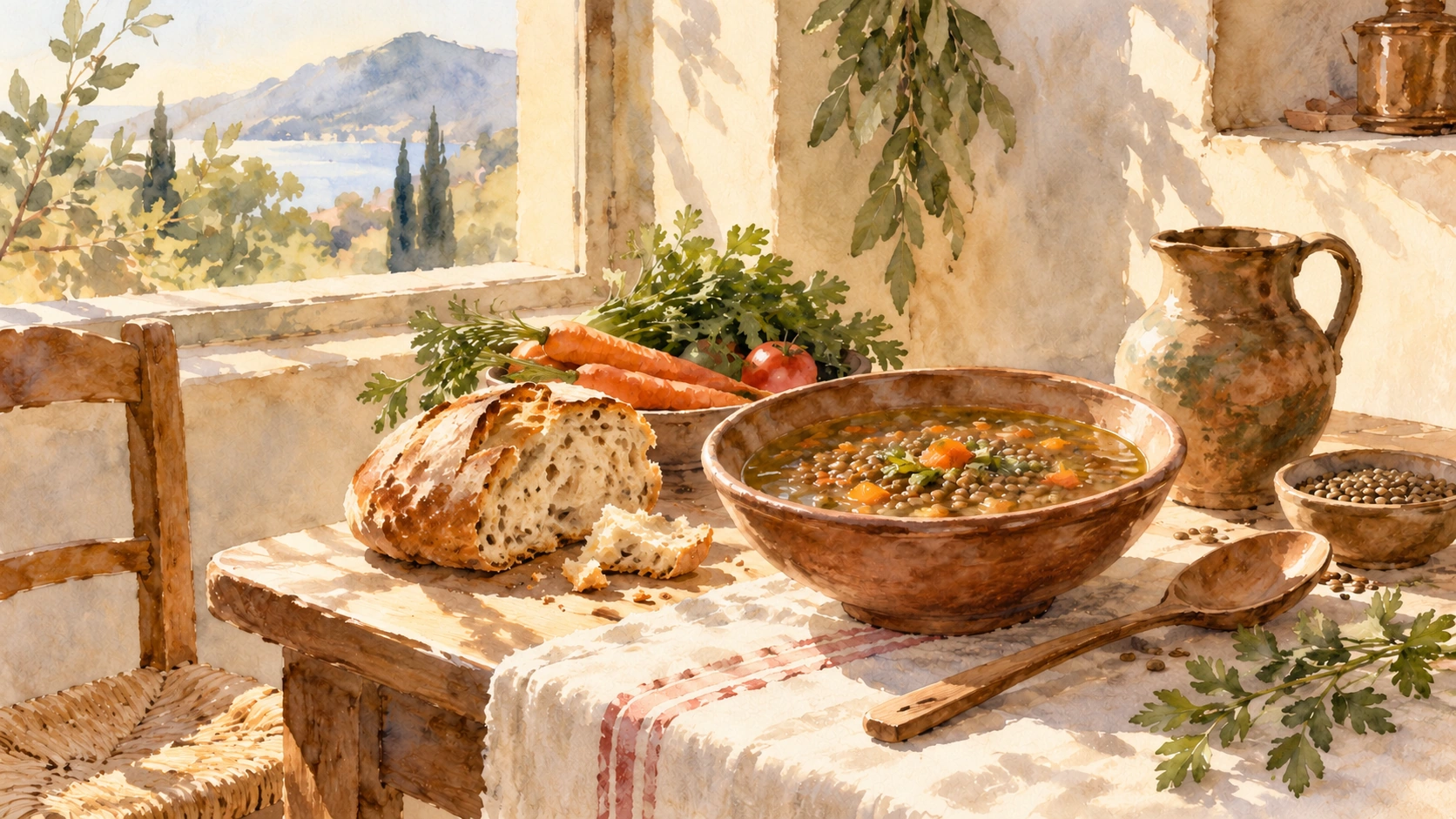
Wednesday and Friday can look like unexpected marks on an otherwise ordinary calendar. Why fast in the middle of a working week when no major feast seems close? The rhythm is connected with remembering Christ, not with declaring certain foods bad.
Wednesday recalls Christ’s betrayal; Friday recalls his crucifixion and death. Returning to these events during an ordinary week helps keep the Gospel from belonging only to occasional celebrations. The broader purpose is discussed in why Orthodox Christians fast; here the focus is these two weekly days.
Not every Wednesday is the same
The church year includes fast-free weeks when the usual Wednesday and Friday fast is not observed. A feast can also affect the appointed food allowances. One memorized menu therefore cannot become a permanent rule for every date.
Consult the Church Calendar and ask about your parish’s practice. Calendar symbols can be confusing at first. Asking is more useful than concluding that everyone else must be breaking the rule.
Give the day more than a different meal
Notice one ordinary setting in which attention slips: an irritated answer at home, an impulsive purchase, or endless scrolling. A food discipline can be accompanied by prayer and an effort not to hurt another person.
This is not an invitation to replace fasting entirely with whatever feels convenient. It is a reminder that outward practice and relationships belong together. A simple meal accompanied by constant judgment of other people’s plates misses the point.
Start with the working day you have
Plan an accessible meal beforehand. You need not buy expensive replacements for everything you usually eat. An uncomplicated meal that nourishes you and suits your circumstances is often more practical than an elaborate new menu.
If you rely on a shared canteen or food prepared by others, discuss a manageable approach with your priest. Do not turn every spoonful into a family argument or suddenly demand a separate kitchen. A beginning that acknowledges circumstances is easier to sustain.
When personal guidance is needed
Illness, pregnancy, breastfeeding, childhood, and demanding work require care. Do not independently set aside medical advice. Discuss health with your clinician and the measure of fasting with your priest, explaining your actual limitations.
If you forget and eat as usual, do not punish yourself by going hungry. Return calmly to the practice you have agreed on and discuss difficulties when necessary. Fasting develops faithfulness and good judgment, not endless accounting of mistakes.
For next Wednesday, make a modest plan: a suitable meal, a few minutes of prayer, and one act of kindness without announcing a spiritual achievement.