
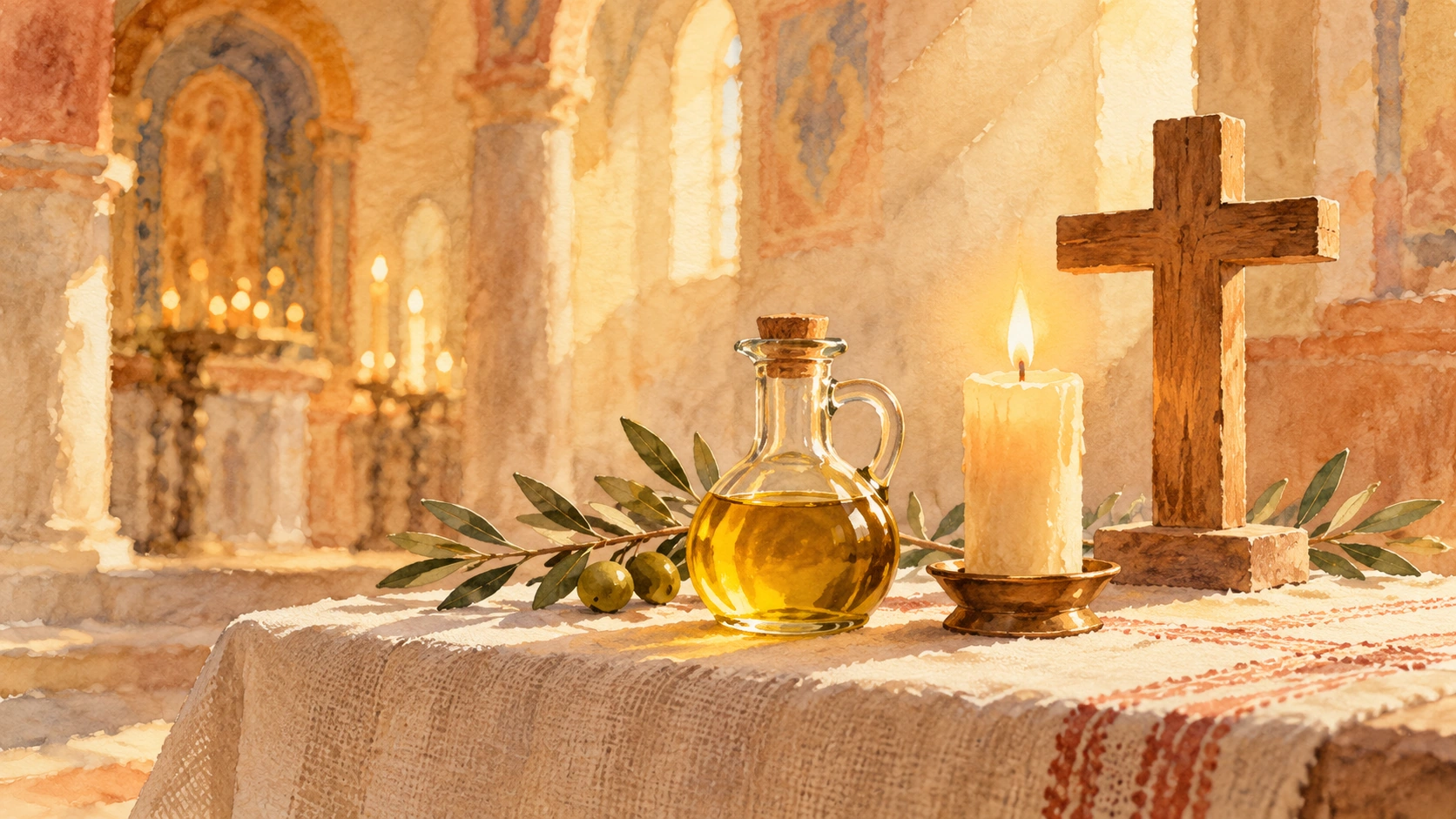
Someone suggests receiving Holy Unction, and your first thought is: “Does that mean I am dying?” The word can sound frightening when it has never been explained. In Orthodoxy, Holy Unction is a sacrament of prayer for healing and forgiveness, involving anointing with blessed oil. It is not reserved for the final hours of life.
What is Holy Unction?
The Church prays for a person who is ill, asking God for healing of body and soul. Its biblical foundation includes the instruction to call the elders of the Church to pray over the sick and anoint them with oil: the Letter of James, chapter 5, verses 14–16.
The oil is not an independent power. Nor does the sacrament promise a particular medical outcome. If illness continues, that gives us no reason to blame the person for lacking faith.
Who should ask about receiving it?
Holy Unction is offered to Orthodox Christians in need of healing. If you are ill, undergoing treatment or unsure whether it is appropriate for you, speak privately with your priest. Your medical history need not become a public conversation in the church.
Parishes may offer communal services, including during Great Lent. A date in the calendar is not a command for everyone to attend. Avoid treating the sacrament as an annual procedure that must be completed or comparing your participation with someone else’s.
What happens during the service?
There are readings from the apostolic letters and Gospels, prayers and anointings with oil blessed for the service. The rite envisages several priests praying together, but help for a sick person is not made impossible when seven priests are unavailable.
The service may be lengthy. Ask about the time involved and seating. Tell someone beforehand if standing or moving is difficult; physical limitations should not become an unspoken barrier to receiving pastoral care.
Preparing thoughtfully
Ask the parish whether registration is needed, what to bring and what clothing makes anointing practical. Preparation also involves attention to prayer and a willingness to repent, rather than simply assembling the right objects.
Unction does not replace confession. Deliberately concealing something in the hope of avoiding confession misunderstands the sacrament. Our guide to a first confession may help if that conversation feels daunting. Discuss fasting and Communion separately with the priest, taking your health into account.
Continuing medical care
Continue prescribed treatment. Do not stop medication or delay seeing a doctor while waiting for Unction. Prayer and medical care can belong alongside each other.
If someone cannot travel, ask about a priest visiting at home or in hospital, with arrangements agreed by the parish and institution. An urgent medical situation requires urgent medical help; spiritual care can be organised alongside it.
Afterwards, there is no need to search for an immediate sensation proving that something happened. Give thanks, continue treatment and ask for practical support where needed. You can Ask Father Peter about the sacrament’s meaning, while discussing personal preparation with your parish priest.