
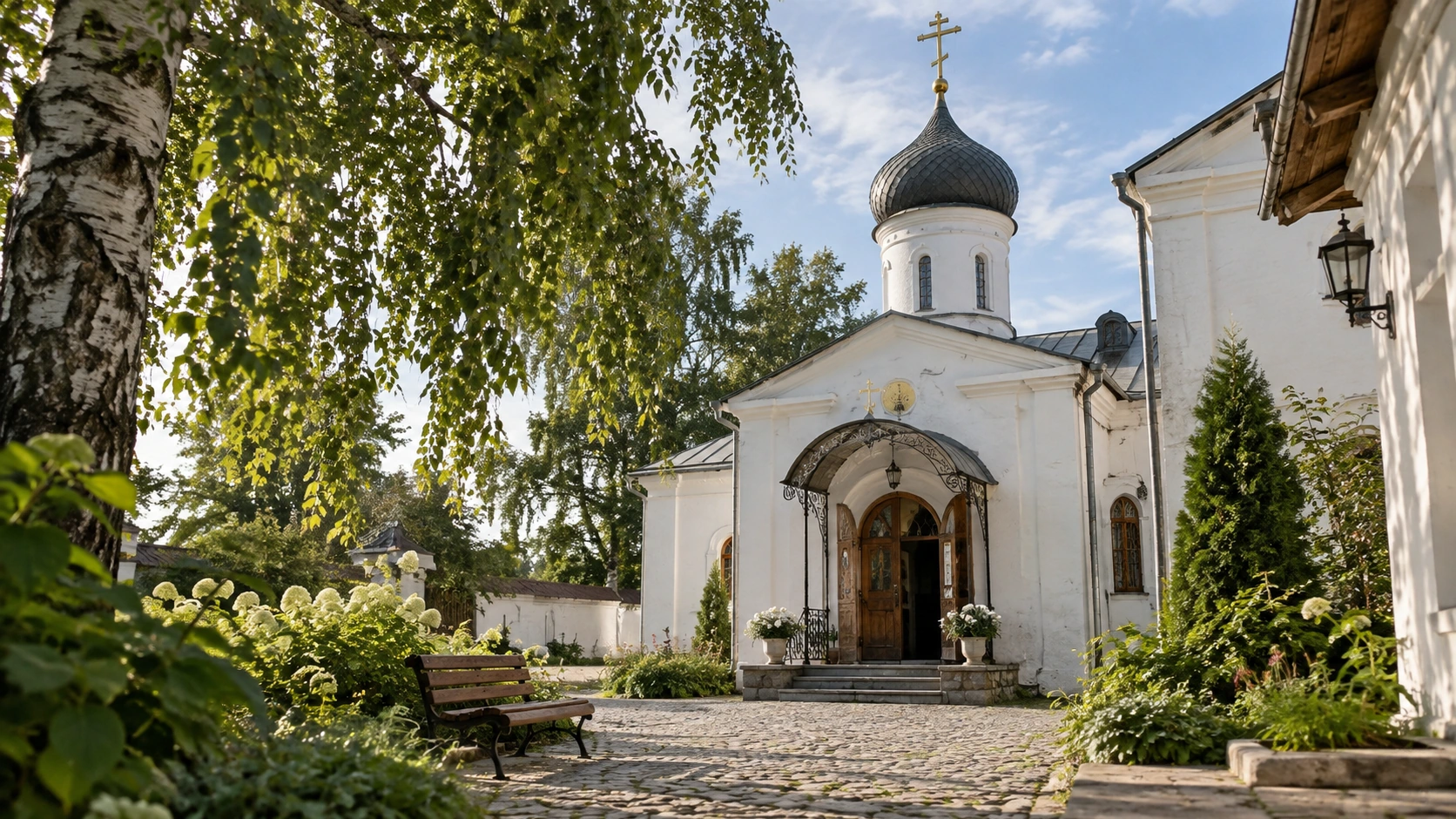
When you first notice icons in an Orthodox church, hear saints named in prayers, or open a church calendar, questions naturally arise. Who are these people? Why do Christians speak to them? Must you choose one saint or memorize every feast day? The Orthodox answer begins with Christ, not with complicated rules. Saints help us see how Christian faith has been lived by real people: in family life, service, work, suffering, repentance, and love for neighbors.
Who saints are
Saints are not gods, and they do not replace Jesus Christ. They are human beings whose lives reveal God’s grace: they trusted God, sought to do his will, and grew in love. Holiness does not mean a person was never weak or that life was easy. It means life in Christ became visible in them. In Romans / Chapter 1 / Verse 7, the Apostle Paul addresses the Christians in Rome as God’s beloved, called to be saints. Holiness, then, is not a private calling for remarkable people. It is the shared calling of every Christian.
The Church glorifies a saint not to turn a human being into something divine. God alone is holy by nature. Glorification recognizes that God’s holiness has been clearly manifested in the Church through a particular man or woman whose life was faithful to God. It is not simply a human award or a vote that creates holiness. The Church bears witness to the grace of God already made known in that person’s life.
Honor is not worship
Worship belongs to God alone: Father, Son, and Holy Spirit. Christians turn to God as the source of life, mercy, and salvation. Saints are honored with gratitude to God because his light was shown in their lives. An icon is not an independent object of power. It recalls a person who lived by faith in Christ and turns our attention toward God. Psalm 98 calls people to worship the Lord our God, because the Lord is holy. This distinction protects the true meaning of honoring saints.
Honoring a saint can be very simple. Learn something about that person’s life, thank God for the example, ask the saint to pray for you, and try to practice one virtue you see there: patience, mercy, courage, honesty, or faithfulness. Honor does not require dramatic feelings. It grows from the Church’s memory and from a sincere, living faith.
Why ask saints to pray
To move from reading to prayer, the Prayers section offers verified texts with short introductions.
When an Orthodox Christian says, “Saint, pray for me,” this is not a request to a separate power that grants wishes. It is a request for intercession before God, much like asking a trusted fellow believer to pray in a difficult time. Saints are fellow members of the Church who are with God. Yet every prayer remains directed to God and entrusted to his will. Prayer is not a technique that guarantees a desired result. An answer may come differently than expected, or may call for patience and a change in our own life.
- turn first to God with thanksgiving, repentance, and your needs;
- ask a saint to pray to God for you;
- do not treat a saint as a specialist assigned to one kind of problem;
- do not seek a guarantee, a secret sign, or control over the future;
- join your request to a willingness to live faithfully and do the good you can.
Different lives, one faith
Saints lived very different lives, and this keeps us from imagining that every Christian must follow one pattern. Apostles were sent to proclaim the Gospel. Martyrs bore witness to Christ even when it cost them their lives. Hierarchs were bishops and teachers who served the Church through pastoral care and teaching. Monastics followed a particular path of prayer, self-denial, and spiritual labor. The righteous are saints who lived faithfully in the world. These names describe forms of service, not a ladder on which one kind of saint matters more than another.
How to begin learning about a saint
Begin with a person whose story interests you: explore the saints and their feast days. The catalogue brings together short lives, days of remembrance and related reading.
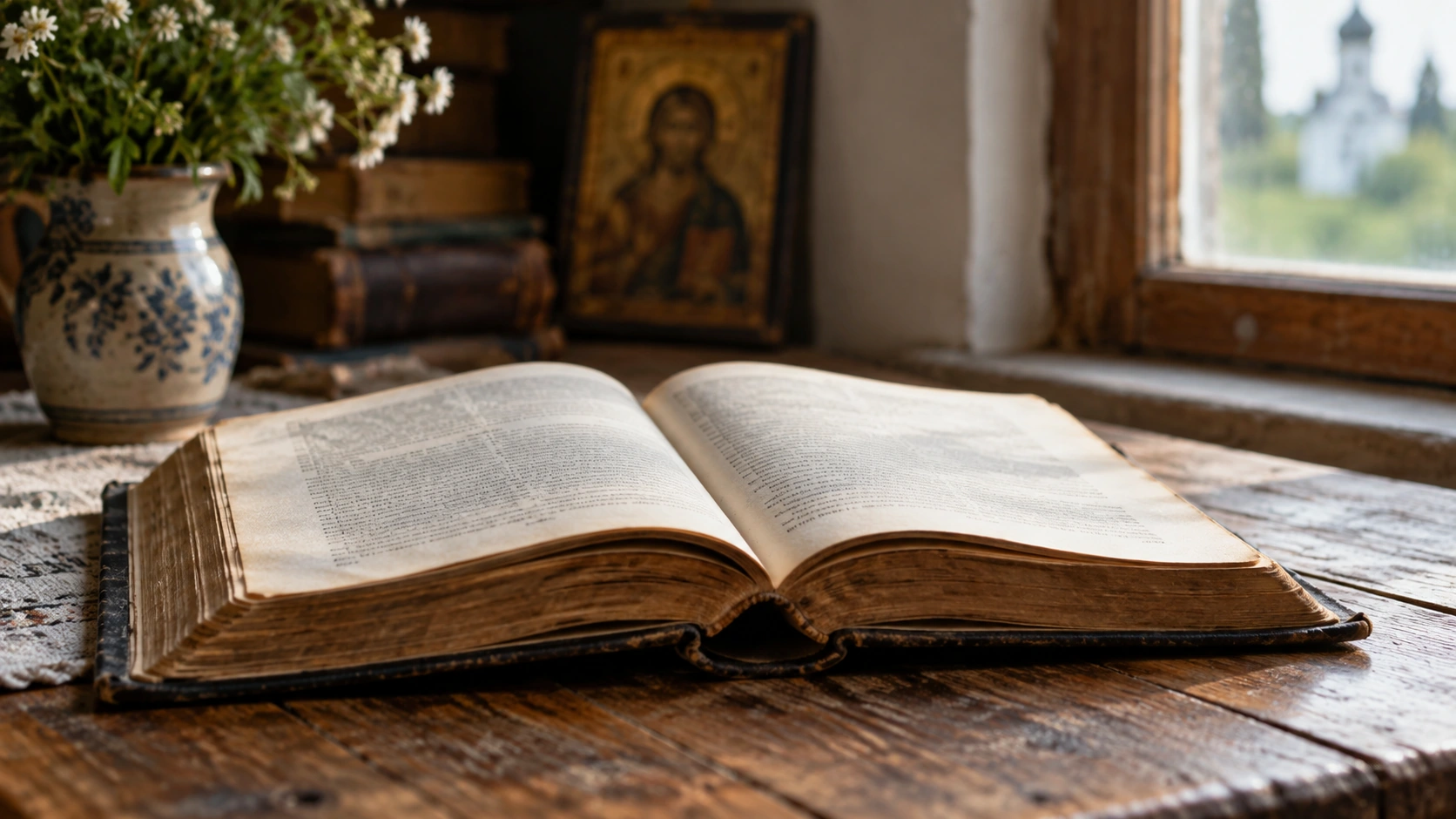
Begin without pressure. Visit our Saints catalogue and days of remembrance, choose a name you have encountered at church, in a calendar, or in your family, and read a brief introduction. Then look for a fuller life in a trustworthy Orthodox publication. Older lives may use unfamiliar language or include literary embellishment, so they should be read thoughtfully. You do not need to settle every question at once. Ask instead: What did this person love? How did this person meet God and other people? What in this life points me back to the Gospel?
Saints and the Church calendar
The Church calendar connects today’s commemorations with the wider rhythm of the Church year.
A saint’s day of remembrance is the day the Church especially remembers that saint in worship and prayer. It may not match dates found on general internet lists, so a church calendar is the better guide. You can explore Saints and days of remembrance in our catalogue and find daily commemorations in the Calendar. For prayer at home, the Prayer catalogue offers dependable texts. If you have a personal question, you can use Ask Father Peter.
Your name, patron saint, and personal connection
A baptized person may have a patron saint connected with the Christian name received in baptism. But this should not become an anxious hunt for one mandatory date, nor should you assume that the closest feast day to your birthday is certainly the right one. There is no universal rule that works that way. If you are baptized and unsure about your patron saint, speak with your parish priest. He can help you consider your name and local church practice. You may also feel a genuine personal appreciation for another saint whose life has become meaningful to you.
Saints show faith lived in real life
Saints do not draw attention away from Christ. They show that faith in Christ can transform a human life. Their lives are not ready-made scripts to copy, because each person has different circumstances and gifts. But they can encourage one small next step: pray with more attention, seek reconciliation, notice someone in need, act honestly, or come to worship. Exploring our Saints catalogue and days of remembrance is a calm way to begin. The deepest purpose is not collecting facts, but seeing how God’s love can become real in a human life.
Return to the Saints catalogue whenever you want to revisit a familiar life or discover a new one. Choose one story and consider what it helps you notice in your own life.