
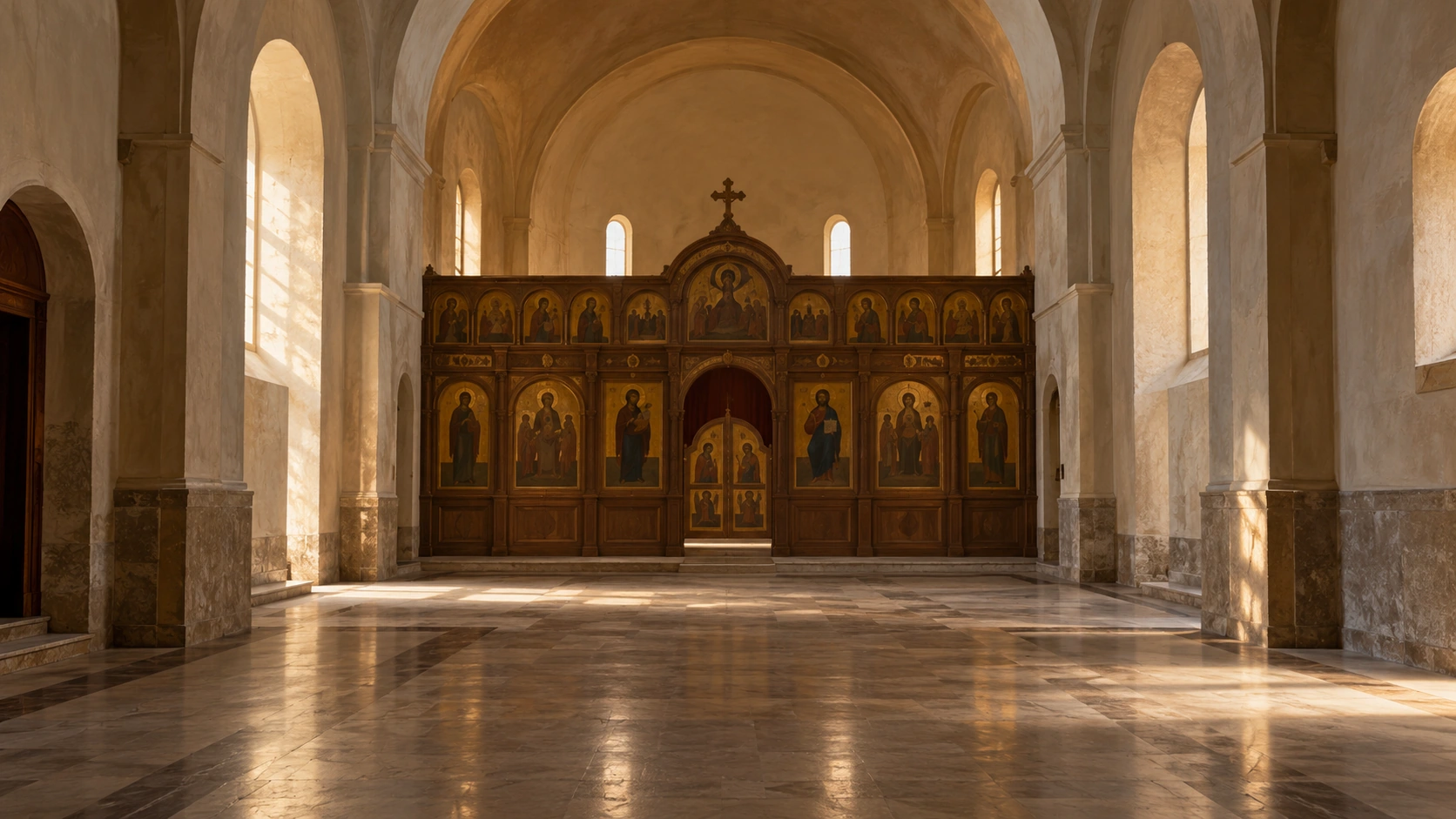
Holy Communion, also called the Eucharist, is not simply a moving part of a service or a private religious symbol. In the Orthodox Church, it is the sacrament in which believers receive the true Body and Blood of Christ under the appearance of bread and wine. The word Eucharist means thanksgiving: the Church gathers before God in gratitude, prayer, and hope.
It can feel difficult to approach this subject for the first time. Some people fear making a mistake; others imagine Communion as a way to automatically solve a personal problem. A steadier starting point is this: it is an encounter with Christ within the life of the Church, calling for trust, reverence, and an honest conversation with a parish priest.
The meaning of the Eucharist
At the Last Supper, Christ gave His disciples bread and the cup, connecting them with His Body and Blood and with the new covenant; this is the sense conveyed in the Gospel according to Matthew, 26:26–28. Orthodox Christians therefore do not see Communion as a reminder of the past alone. Christ truly gives Himself to His people in it. It is not a magical ritual for health, success, or protection from hardship, but a sacrament of union with Christ and with one another.
Who receives Communion
Receiving Communion belongs to the life of the Orthodox Church. Those who receive are Orthodox Christians welcomed into the Church through Baptism and Chrismation, or through the Church’s appropriate order for their circumstances. Communion expresses unity in faith and Church life; it is not a judgment of a visitor’s or seeker’s personal worth.
- A visitor, seeker, or Christian from another tradition may participate in the Liturgy through prayer and attention without approaching the Chalice.
- If you are new to the parish, returning after a long absence, or uncertain about your Church status, speak with a priest ahead of time.
- Practical customs can differ from parish to parish, but that does not mean preparation should be designed alone.
Preparation and repentance
Preparation begins not with an anxious checklist but with turning the heart toward God. Prayer can help us notice distraction, resentment, pride, and our need for mercy. Repentance is not self-contempt. It is truthful recognition and a desire to change what can be changed. When there is conflict, make a real step toward peace: apologize, stop a harsh exchange, or acknowledge your own part honestly.
- Contact the parish before Sunday or a feast day to learn the time of the Liturgy, confession, and a possible conversation with the priest.
- Explain your situation simply: when you last received Communion and what questions you have about fasting, prayer, or confession.
- Follow the workable preparation your priest gives you rather than collecting unrelated advice from many places.
Fasting and personal circumstances
The Church’s tradition includes a Eucharistic fast before receiving Holy Communion. Yet a general tradition should not become a homemade universal formula with an exact number of days, foods, or prayers. Confession, prayer, and fasting belong to Church life, while their concrete form is best discussed with a priest in light of a person’s age, health, responsibilities, and circumstances. Practices concerning confession before Communion can differ, so ask about the order in your parish rather than drawing a universal rule from advice online.
Health, children, and a workable measure
Pregnancy, nursing, chronic illness, required medication, shift work, and caring for young children may call for a different form of preparation. Do not stop prescribed medication for the sake of fasting, and do not make that decision alone. A doctor addresses treatment; a priest can help find a careful Church practice. Children’s preparation is also guided with parents and a pastor, not simply copied from an adult pattern.
- Tell the priest ahead of time about important health limitations.
- Do not measure your preparation against someone else standing in line for Communion.
- A pastoral adjustment for weakness does not remove the need for reverence.
A first visit and approaching the Chalice
If you are preparing for the first time or after an absence, come to the beginning of the Liturgy rather than arriving only for Communion. You do not need to memorize every movement beforehand. Follow the clergy and parish helpers about where to stand, when to approach, how to give your name, and what to do afterward. Learn this order in the parish you are visiting.
After receiving Communion
After Communion, thanksgiving prayer, quiet, and ordinary attentiveness to others are fitting responses. There is no need to seek unusual feelings or judge whether your experience was intense enough. Faith also appears in simple acts: a gentler word at home, a promise kept, a refusal to continue habitual harshness. If you are not ready to receive today, you can remain for the Liturgy, pray, and seek guidance for the next step.