You are about to cook dinner and wonder what to keep on the menu during a fast. The basics are simple: no meat, dairy or eggs; grains, vegetables, pulses and fruit are suitable.
Fish and vegetable oil, however, are not allowed every day. Below you will find a food list and a guide to the days of the Nativity Fast. Other fasts have different schedules, and it is best to discuss your own rule with a priest.
What you can and cannot eat during a fast
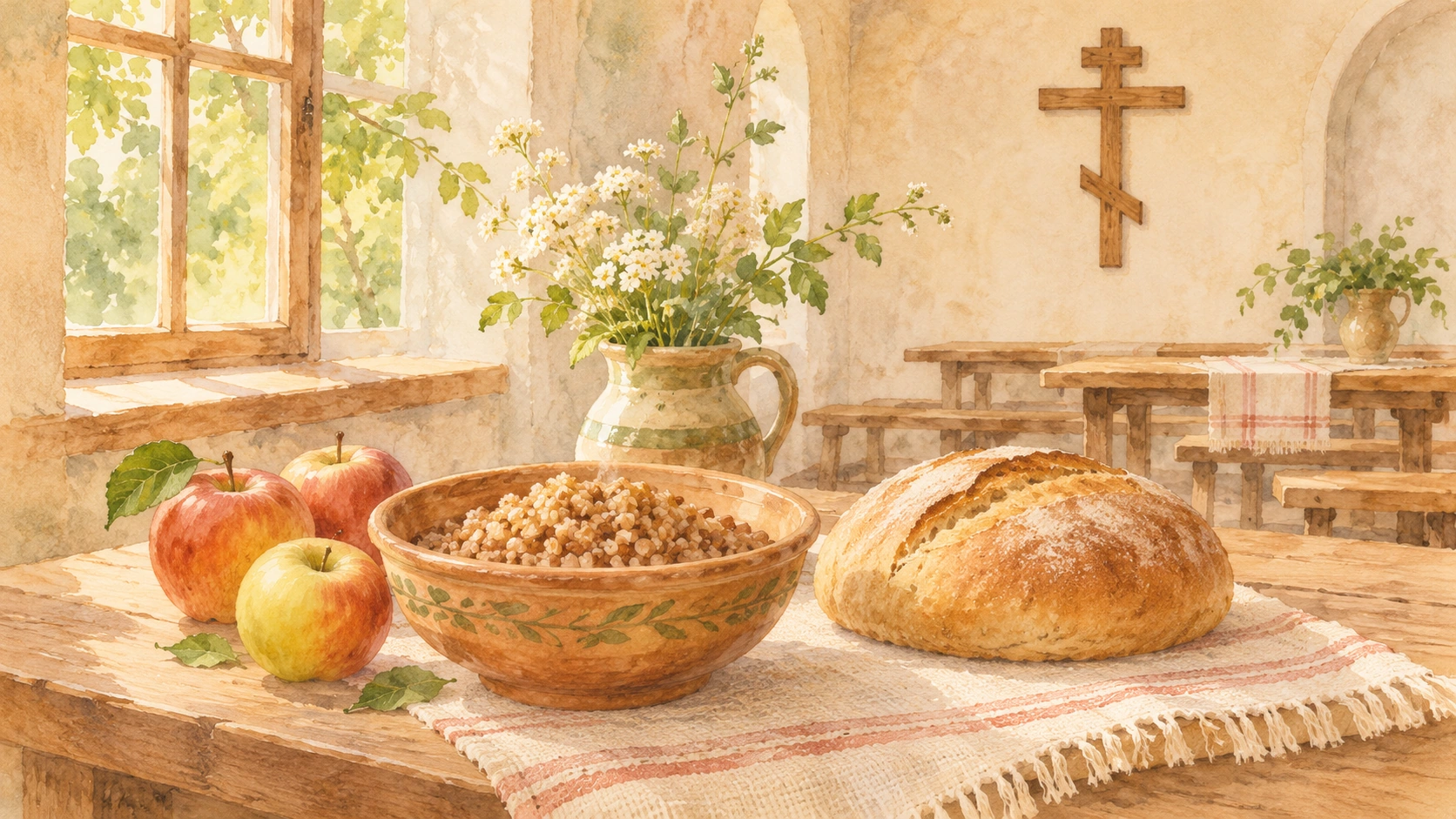
- You can eat buckwheat, rice, oats and other grains prepared without milk or butter.
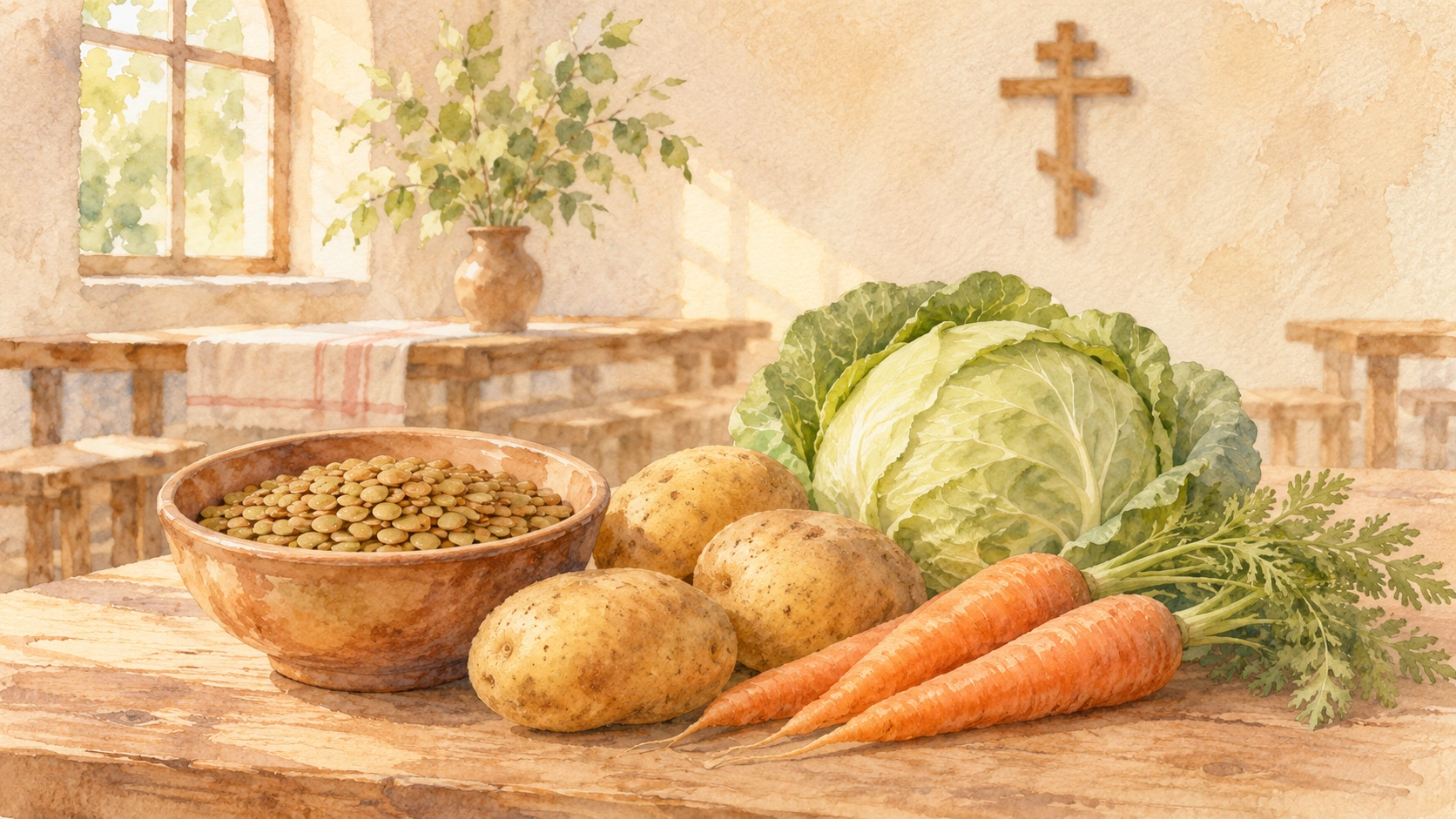
- You can eat potatoes, cabbage, carrots and other vegetables; beans, peas, lentils and mushrooms.
- You can eat fruit, berries, dried fruit and nuts, if they suit you.
- Choose bread and pasta without milk, butter or eggs in the ingredients.
- Leave out meat and meat stocks, sausages, milk, cheese, cottage cheese, sour cream, butter and eggs.
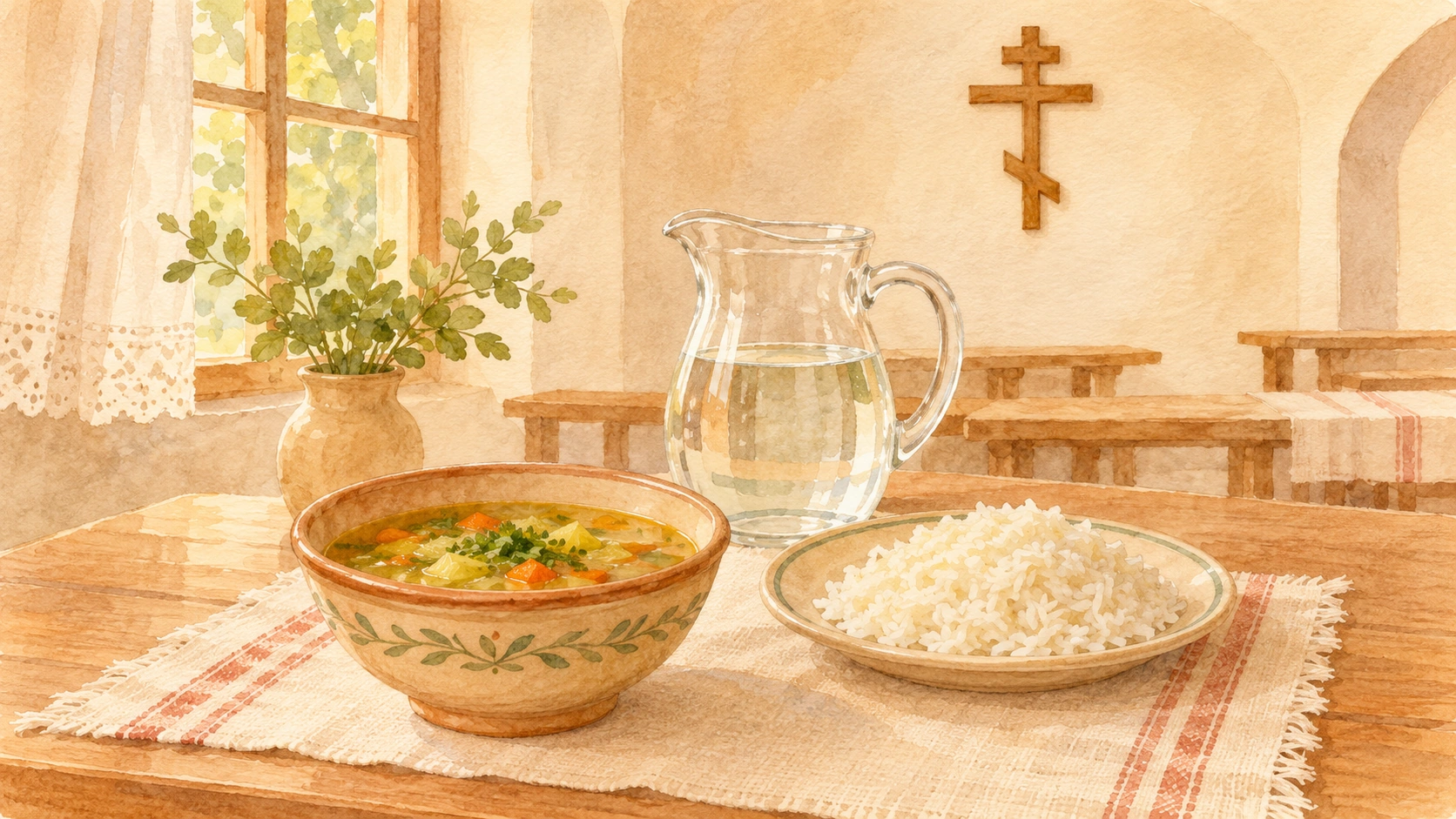
For prepared foods, checking the ingredients on the packaging helps. Vegetable soup made with meat stock, for example, is no longer a fasting dish. At home you can make soup with water, vegetables and beans. You do not have to buy special substitutes just because they are labelled as fasting foods.
What you can eat on each day of the Nativity Fast
The Nativity Fast runs from November 28 to January 6. Here is a guide for an ordinary week:
- Monday, Wednesday and Friday: plant foods without vegetable oil.
- Tuesday and Thursday: plant foods with vegetable oil.
- Saturday and Sunday: fish is allowed.
- On major feast days, including December 4, the Entry of the Most Holy Theotokos into the Temple, fish is allowed.
- From January 2 to 6 the fast becomes stricter: fish is excluded, including at weekends.
What can you eat during a strict fast?
The word “strict” can sound as though almost all food is forbidden. But a day without oil does not mean going without food altogether. You can cook rice or buckwheat in water, boil potatoes, and eat vegetables and fruit.
Do not automatically adopt the strictest rule you find in someone else's calendar. Many lay people follow a gentler fast on a priest's advice. Tell him about your diet, work and previous experience of fasting.
What can you eat before Communion?
It helps to distinguish the fasting days of preparation from the time immediately before Communion. During the days of preparation, fasting foods are the guide; discuss the extent and length of the fast with a priest. You do not need to set yourself the harshest rule.
Immediately before Communion, the usual practice is to abstain from food and drink. Ask at your church in advance when this begins for you. If you take prescribed medicines or have dietary restrictions, discuss them with your doctor and tell the priest. Do not change your treatment on your own.
Who can follow a gentler fast?
A gentler fast may be appropriate if you are ill, pregnant or doing physically demanding work. Tell the priest about your circumstances openly. If you are ill or pregnant, discuss dietary changes with your doctor: a church calendar alone cannot determine the right diet for you.
An allowance does not make your fast meaningless. Prayer, care for loved ones and helping someone in difficulty remain part of it. Do not compare your plate with someone else's: you may not know their circumstances.
How to plan meals without extra fuss
- Choose a familiar base: porridge made with water, vegetable soup, or potatoes with beans.
- Check whether oil is allowed today; on a fish day, add fish if you wish.
- Plan your food for the working day ahead so you do not have to decide everything when you are hungry.
Begin with what you can manage. You can read about the Nativity Fast for beginners and preparing for Communion. If your circumstances do not fit a general list, you can ask Father Peter.