The Nativity Fast is the forty days before the feast of the Nativity of Christ. In the Russian Orthodox Church, which follows the Julian calendar, in 2026 it begins on Saturday, November 28, and lasts until January 6, 2027, Christmas Eve. It is also called St Philip’s Fast, because on the eve, November 27, the Church remembers the Apostle Philip.
If you have never fasted, this is a good place to start. It is gentler than Great Lent, and its purpose is simple: to come to Christmas with an open heart rather than worn out by the holiday rush.
Why we fast
Fasting is not a diet or a test of willpower. Setting aside some familiar foods frees time and attention for prayer, for those close to us and for those who are struggling. Christ warns that fasting for show is pointless:
«Moreover, when you fast, do not be like the hypocrites, with a sad countenance. For they disfigure their faces that they may appear to men to be fasting. Assuredly, I say to you, they have their reward. But you, when you fast, anoint your head and wash your face, so that you do not appear to men to be fasting, but to your Father who is in the secret place; and your Father who sees in secret will reward you openly.»
Gospel of Matthew / Chapter 6 / Verses 16–18
What to eat: the order of the days
According to the Church rule, the Nativity Fast is a moderate fast. Meat, dairy and eggs are set aside. Beyond that, it depends on the day of the week:
- Monday, Wednesday and Friday are the strictest days, food without oil;
- Tuesday and Thursday, oil is allowed;
- Saturday and Sunday, fish is allowed;
- fish is also allowed on major feasts, such as the Entry of the Theotokos into the Temple, December 4;
- January 2–6 are the strictest days before Christmas, without fish.
This order comes from the monastic rule. Many families and parishes fast more gently, for example eating fish every day except Wednesday and Friday. Both practices are known in the Church, and neither makes a person “better” than another.
How to begin if this is your first fast
There is no need to take on everything on the first day. Choose something realistic: for example, give up meat, or cut back on sweets and late-night snacks. A modest rule you keep until Christmas is better than a strict one abandoned after a week.
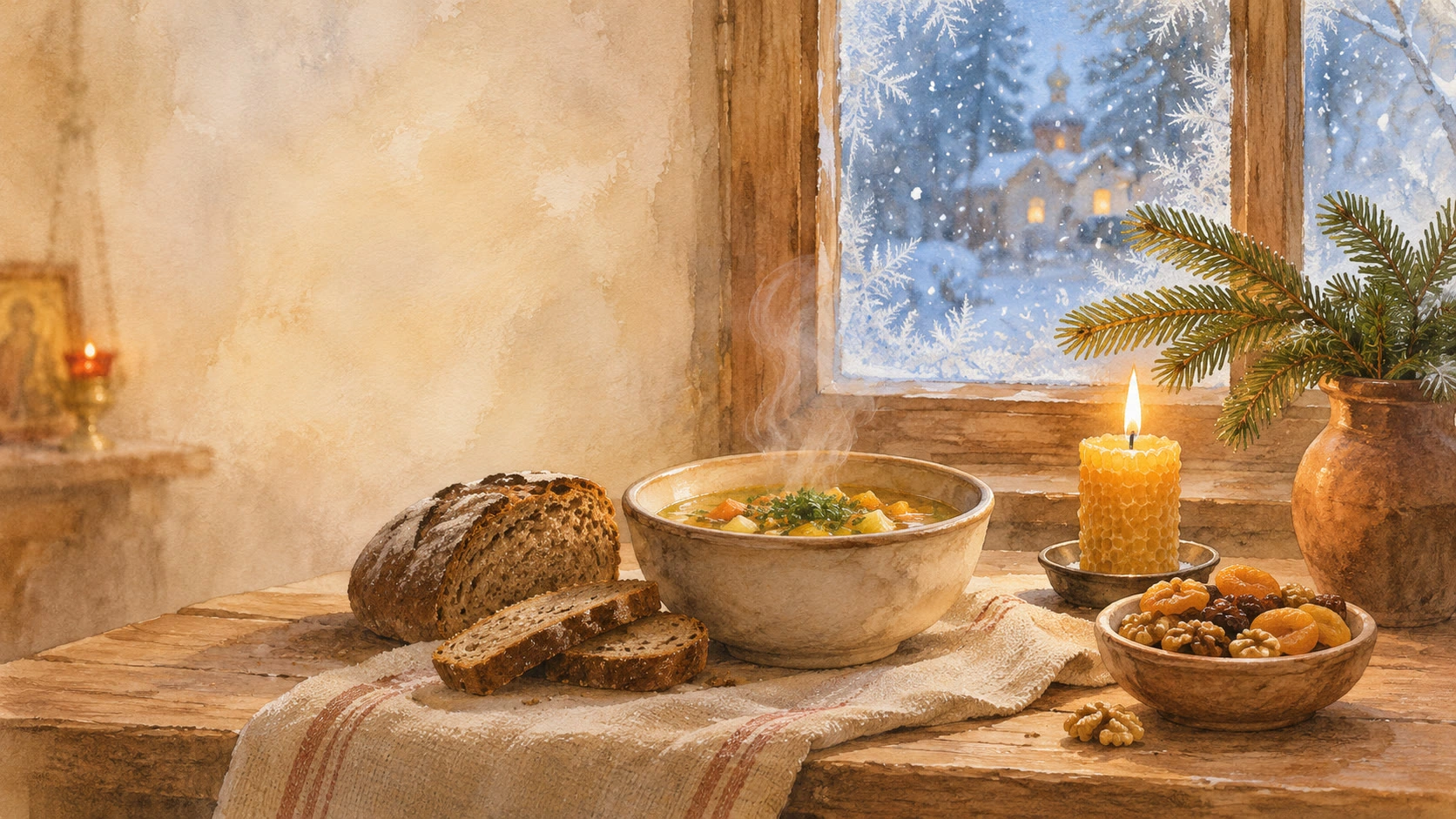
- plan a few simple fasting meals in advance: porridge, vegetable soups, beans, mushrooms, fish at the weekend;
- keep a little time in your day for prayer and reading the Gospel;
- go to at least one Sunday service;
- prepare for confession and Communion, which is especially fitting during a fast.
Fasting is not only about food
Through the prophet Isaiah, God reminds us what kind of fast pleases Him:
«Is this not the fast that I have chosen: To loose the bonds of wickedness, To undo the heavy burdens, To let the oppressed go free, And that you break every yoke? Is it not to share your bread with the hungry, And that you bring to your house the poor who are cast out; When you see the naked, that you cover him, And not hide yourself from your own flesh?»
Isaiah / Chapter 58 / Verses 6–7
Along with food, try “fasting” in other ways: arguing less, scrolling less, calling people you have not called for a long time, helping someone who is lonely before the holidays. This is the real preparation for Christmas.
If you slip
A slip is no reason to abandon the fast. Calmly return to your rule the next day. Fasting is a path, not an exam.
Christmas Eve, January 6
In Russian the eve of Christmas is called “sochelnik”, from “sochivo”, a dish of wheat or rice with honey and nuts. Traditionally people eat little that day, and the festive meal comes after the evening service or after the night-time Christmas Liturgy.
Feast days and fasting days are easy to check in the Church calendar. And if you want to work out how you personally should fast, you can ask Father Peter.