
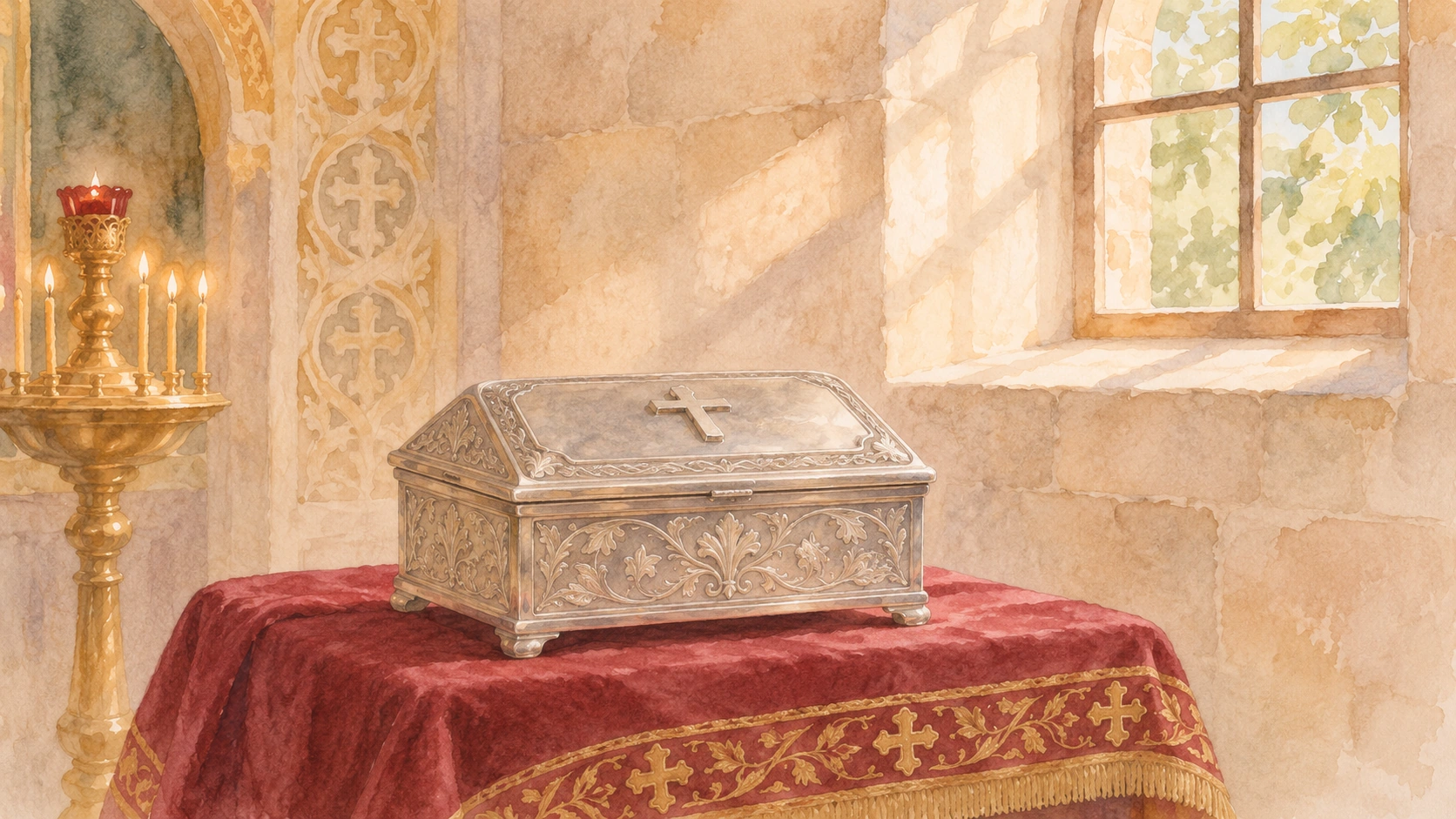
You walk into a church and see a queue leading to a small reliquary. People cross themselves, bow down and kiss it, while you are still wondering what is happening.
Holy relics are the remains of saints venerated by the Church. People kiss the sacred object reverently to express their love for the saint and turn to the saint in prayer. This is not a way to receive help automatically.
Do relics have to be incorrupt?
No. The word “relics” does not mean that a saint’s body has necessarily remained whole and unchanged. It also refers to bones and portions of remains. They are venerated because they belong to a saint, rather than because of an unusual appearance.
So even a small fragment of relics is sacred. The size of a reliquary and the condition of the remains give you no reason to compare saints or look for a place where prayer is supposedly more powerful. At the heart of this veneration are a person who lived with God, and God Himself.
Why do people kiss relics?
Venerating relics is an ancient Christian tradition connected with the remembrance of martyrs. Christians cared for the remains of those who stayed faithful to Christ in the face of death. This love and remembrance continue in the Church.
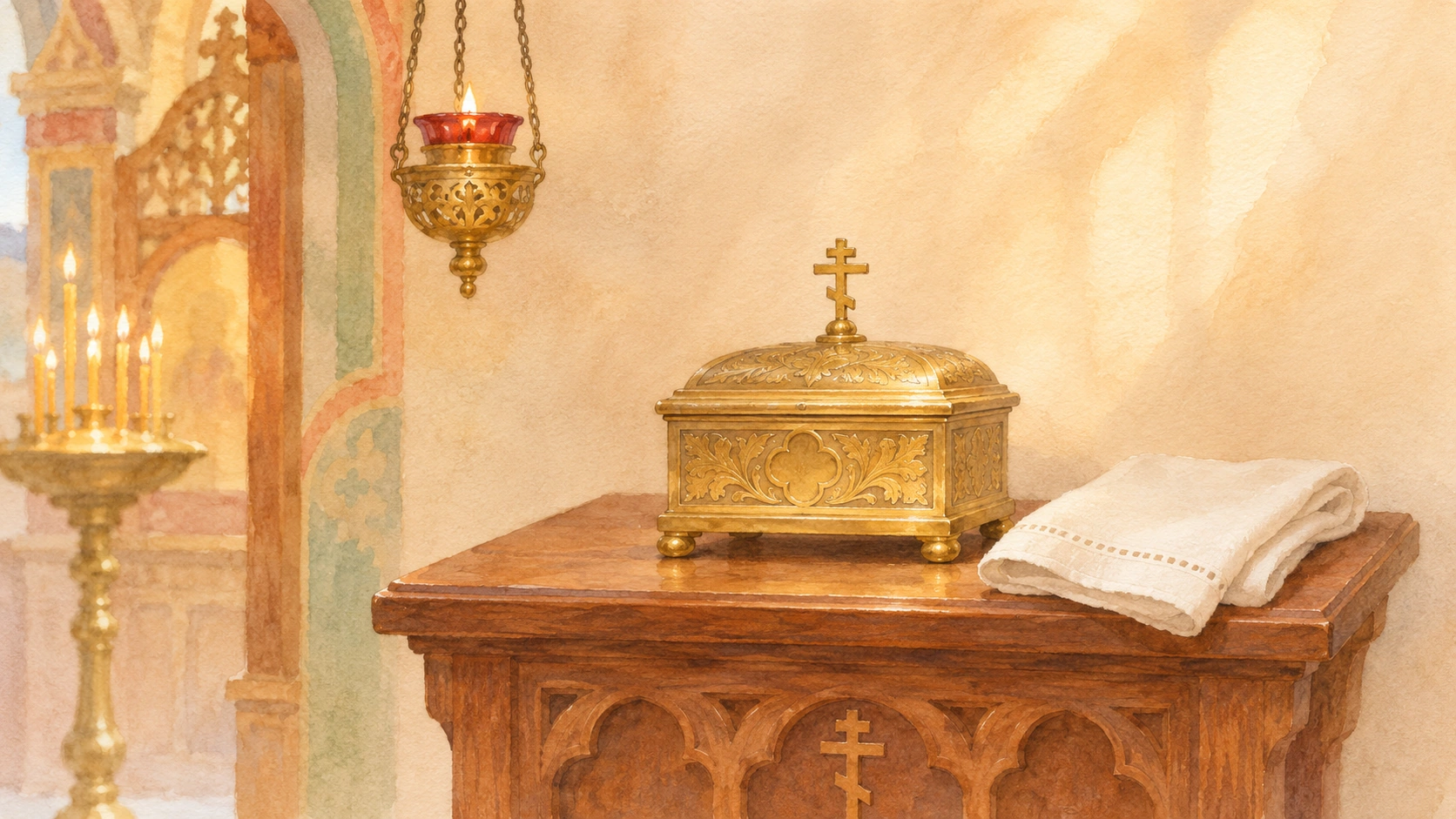
Kissing a sacred object is a physical gesture of respect and love. God reveals His grace through holy things, but grace does not act as an impersonal force. You cannot secure what you want by a single touch or by precisely copying someone else’s movements. Belief in a guaranteed result is a superstition that can easily be confused with faith, especially when you deeply hope for help.
Where are saints’ relics kept?
Relics are kept in churches and monasteries. They are housed in shrines and reliquaries, containers made for this purpose. One place may hold a saint’s relics, while another holds a fragment. The size of the sacred object in itself tells you nothing about how close God is to your prayer.
If you are looking for a particular saint’s relics, begin with the saint’s name and the name of the city. Check the information on the church or monastery’s official website. Before travelling, ask them about access to the relics and visiting times. An article you find online may not tell you where you can visit right now.
How to approach relics for the first time
You can stand nearby for a little while and take things in calmly. If you do not know where to kiss the reliquary, ask a church attendant. A simple question is more helpful here than hurriedly trying to copy everything other people do.
- Approach calmly, respecting the queue and those praying nearby.
- Make the sign of the cross and reverently kiss the sacred object where you are shown.
- You can pray to the saint, ask for the saint’s prayers for you and your loved ones, or give thanks.
- Step away to let others approach; you can continue praying to one side.
What if you cannot travel or stand in the queue?
Queues to venerate relics can be a sign of love for a saint. But a long wait does not become a measure of faith. If you cannot travel or stand for a long time, you can pray at home. You do not have to reach a saint’s relics before turning to that saint in prayer.
You can start gently, without rushing: read about saints in Orthodoxy and praying at home. If something is still unclear, you can ask Father Peter. Your first question about a sacred object can be a simple one.

