You want to remember a loved one, and someone at church suggests requesting a panikhida. If you have never heard the word before, it can be hard to know what to ask or how much time to allow.
A panikhida is a short service of prayer for the repose of those who have died. It usually lasts 20–40 minutes. It can take place in church or at a cemetery; you can attend even if you do not yet know the order of the service.
What is a panikhida in simple terms?
At a panikhida, the priest and those gathered pray to God for the departed. It is an opportunity to remember your loved one and join in prayer with others. You do not have to learn all the words or understand church terminology beforehand to attend peacefully.
If you have only remembered your loved one at home, you can begin with a simple conversation at church. Say that you would like to pray for their repose and do not yet know how to request a panikhida. It is a perfectly reasonable question.
How long does a panikhida last?
The usual guide is 20–40 minutes. If you are planning a journey, arranging to meet relatives or taking time off work, check the starting time and approximate finishing time with the church you plan to visit.
It helps to ask specifically when the panikhida itself will begin. Your arrival at church and the start of the service may be at different times. Knowing this will help you plan your day without feeling rushed during prayer.
When do you request a panikhida?
A panikhida is usually requested on the third, ninth and fortieth days after a death, on the anniversary and on Memorial Saturdays. You do not have to wait for a special date: you can ask for prayers of remembrance on another day too.
There is an important qualification: panikhidas are usually not served during Easter week. If a date important to your family falls in that week, speak with the priest beforehand about when to gather for the service. Avoid trying to work out the schedule from someone else’s experience.
What happens during a panikhida?
The priest conducts the service, with prayers and hymns for the repose of the departed. Those attending usually stand holding lit candles. You can listen and pray with everyone else even if you do not yet understand every word.
If you do not know where to stand or how to hold your candle, ask before the service begins. Handle the flame carefully during the service, keeping the candle away from clothing and hair. Do not rush to copy unfamiliar actions simply because you are afraid of making a mistake.
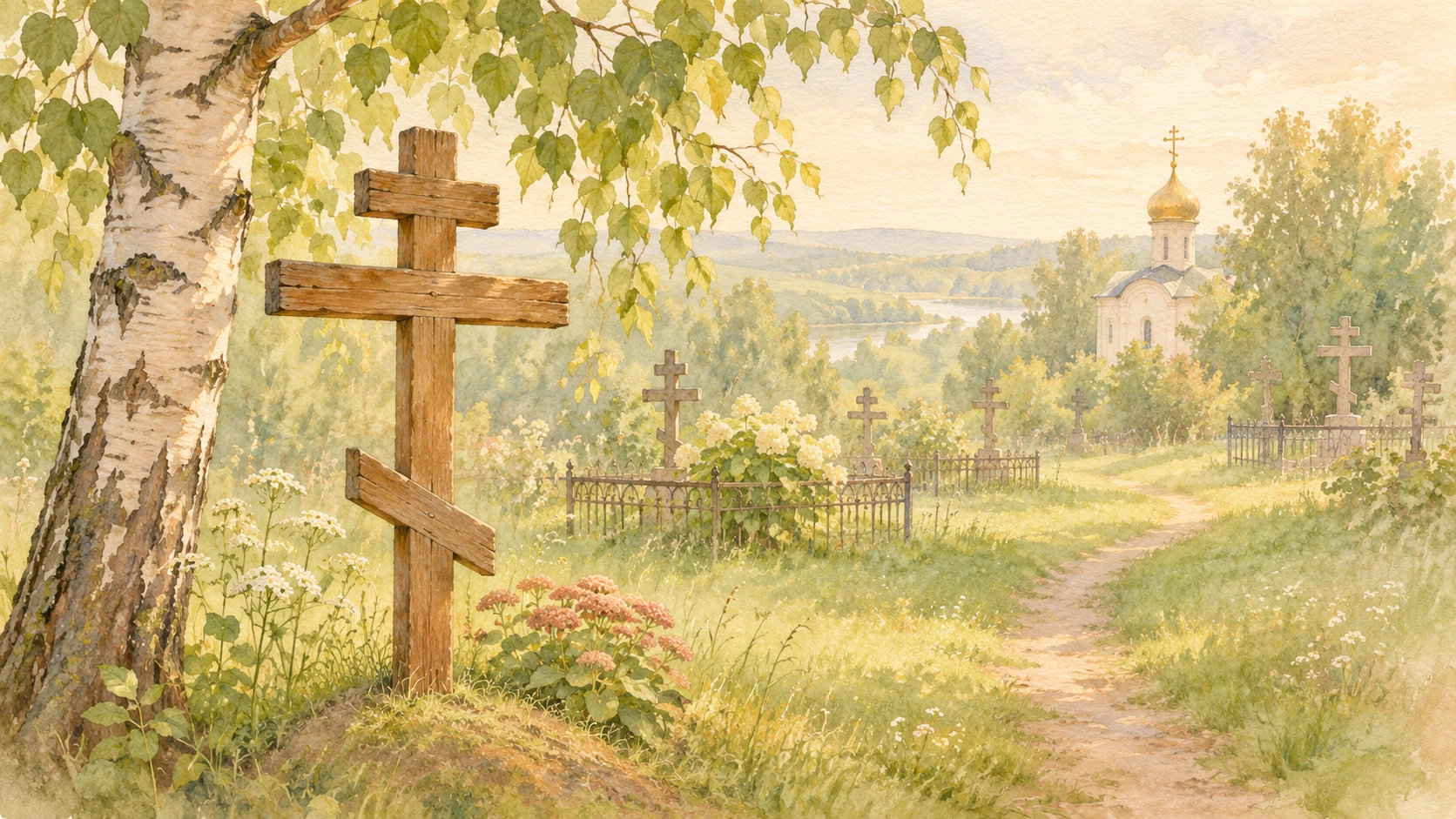
How to request a panikhida
Speak to a church attendant or priest and explain whom you would like to remember in prayer. If you want to gather at a cemetery, mention this straight away. It is best to agree on the place and time before inviting relatives. If you find it hard to put all your questions into words at once, write them down before the conversation. You can begin with the date and place, then ask about the rest.
- Check whether a panikhida can be held on your chosen day and what time it will begin.
- Ask how to submit names for prayers for the repose of the departed.
- Find out where to go before the service and where you can get a candle.
- If this is your first visit, say so: it will be easier to get clear guidance.
You can take your time learning about all of this. Read about days of remembrance in “The ninth and fortieth days after death” and about submitting names in “Submitting prayer names at an Orthodox church”. If you have questions about your situation, you can ask Father Peter.