When someone close to us dies, a flood of tasks comes at once, and a flood of advice. “On the ninth day you must…”, “until the fortieth day you can’t…”. You want to do everything right, and you have almost no strength.
Here is what matters most, without the extras.
Why the 3rd, 9th and 40th days
The custom of remembering the departed on these days is very old. It is mentioned already in the Apostolic Constitutions, a 4th-century text. The third day is linked to Christ’s resurrection on the third day, and the fortieth to the ancient custom of forty days of mourning and to Christ’s Ascension forty days after Pascha.
There are other explanations too, including vivid stories about what happens to the soul on these days. It is important to know that these are private opinions and traditions, not binding Church teaching. The main thing is that these days help us pray for the person and not remain alone with our grief.
What to do on these days
- Submit a note “For the repose” of the departed at church for the Liturgy; this is the most important remembrance.
- Request a panikhida, a short memorial service. It is served in church and sometimes at the cemetery.
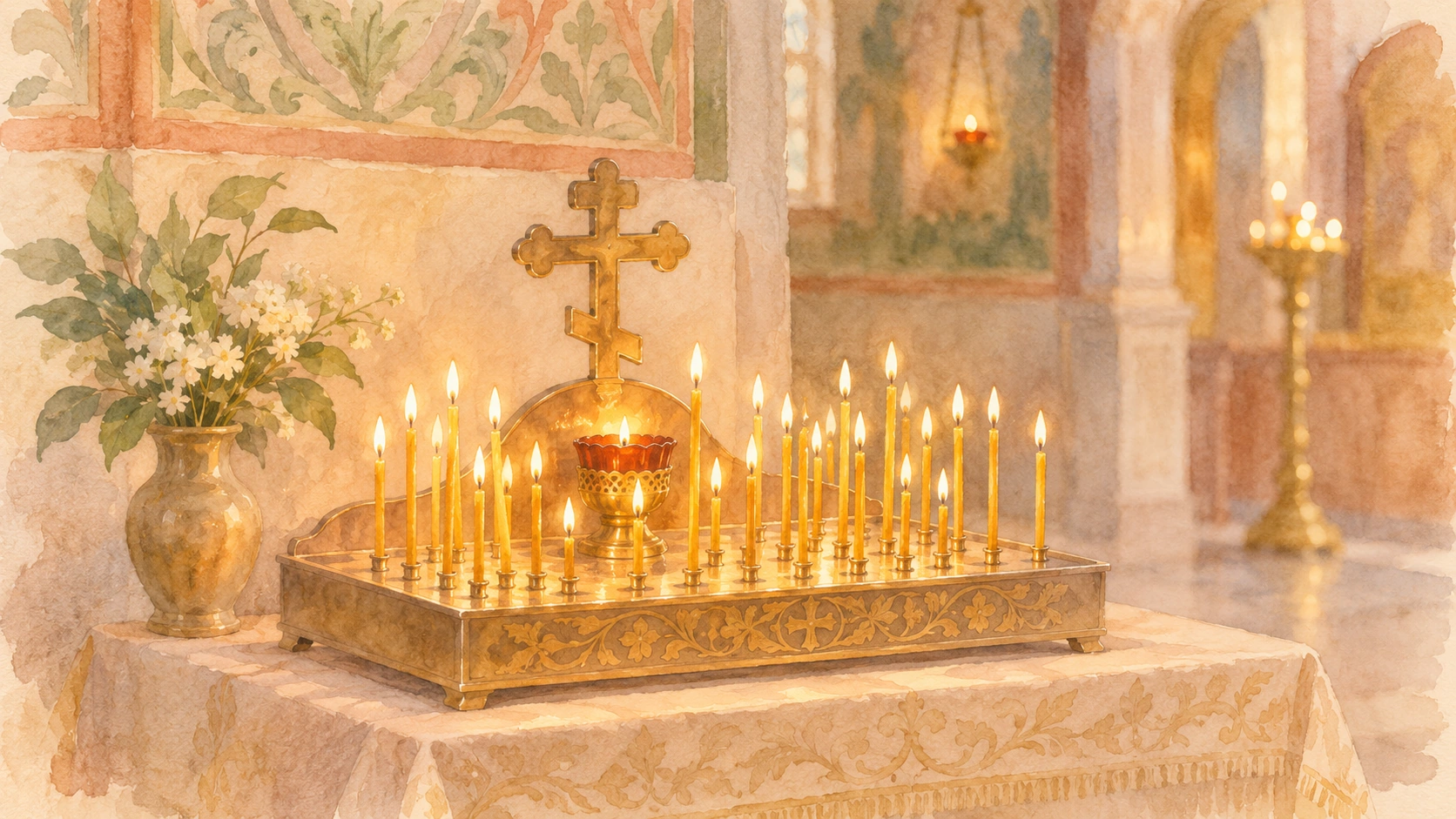
- Place a candle on the kanun, the rectangular candle stand for remembering the departed.
- Pray at home in your own words or read the 17th kathisma of the Psalter, traditionally read on these days.
- Do something good in the person’s memory: help someone in need, make a donation to the church.
If you cannot gather exactly on the ninth or fortieth day, the remembrance can be moved a day earlier or later. God does not count days more strictly than a loving heart.
The memorial meal
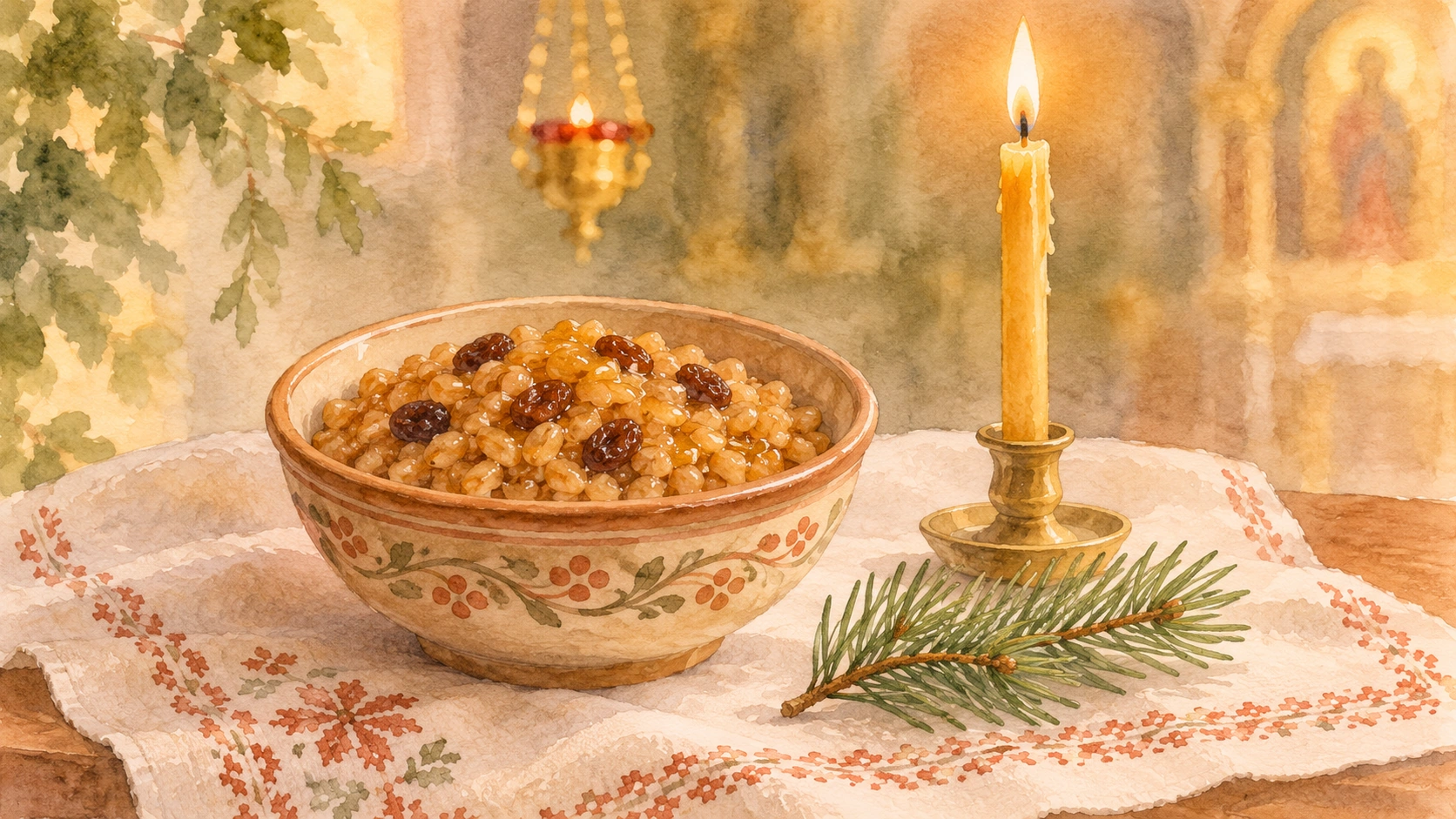
The memorial meal is a time to remember the person and support one another. Traditionally kutia is served: sweet wheat or rice with honey and raisins. The grain is an image of resurrection: it goes into the earth in order to sprout.
A feast with heavy drinking has nothing to do with Christian remembrance. If the meal falls on a fasting day, the food is Lenten.
Which customs are superstition
- “A glass of vodka with bread” for the departed is a folk custom, not a Church one.
- Covering mirrors, not cleaning the house, being afraid to give away belongings before the fortieth day are superstitions.
- Giving the person’s things to those in need is, on the contrary, fine and even good, a good deed in their memory.
Hope, not only sorrow
The Apostle Paul writes:
«But I do not want you to be ignorant, brethren, concerning those who have fallen asleep, lest you sorrow as others who have no hope. For if we believe that Jesus died and rose again, even so God will bring with Him those who sleep in Jesus.»
1 Thessalonians / Chapter 4 / Verses 13–14
Grieving is normal. Crying is normal. But Christian grief always carries hope: death is not the end, and love continues in prayer.
More in “After a loved one dies: an Orthodox perspective”, “How to pray for loved ones who have died” and “Submitting prayer names at an Orthodox church”. You can talk about your loss with Father Peter.