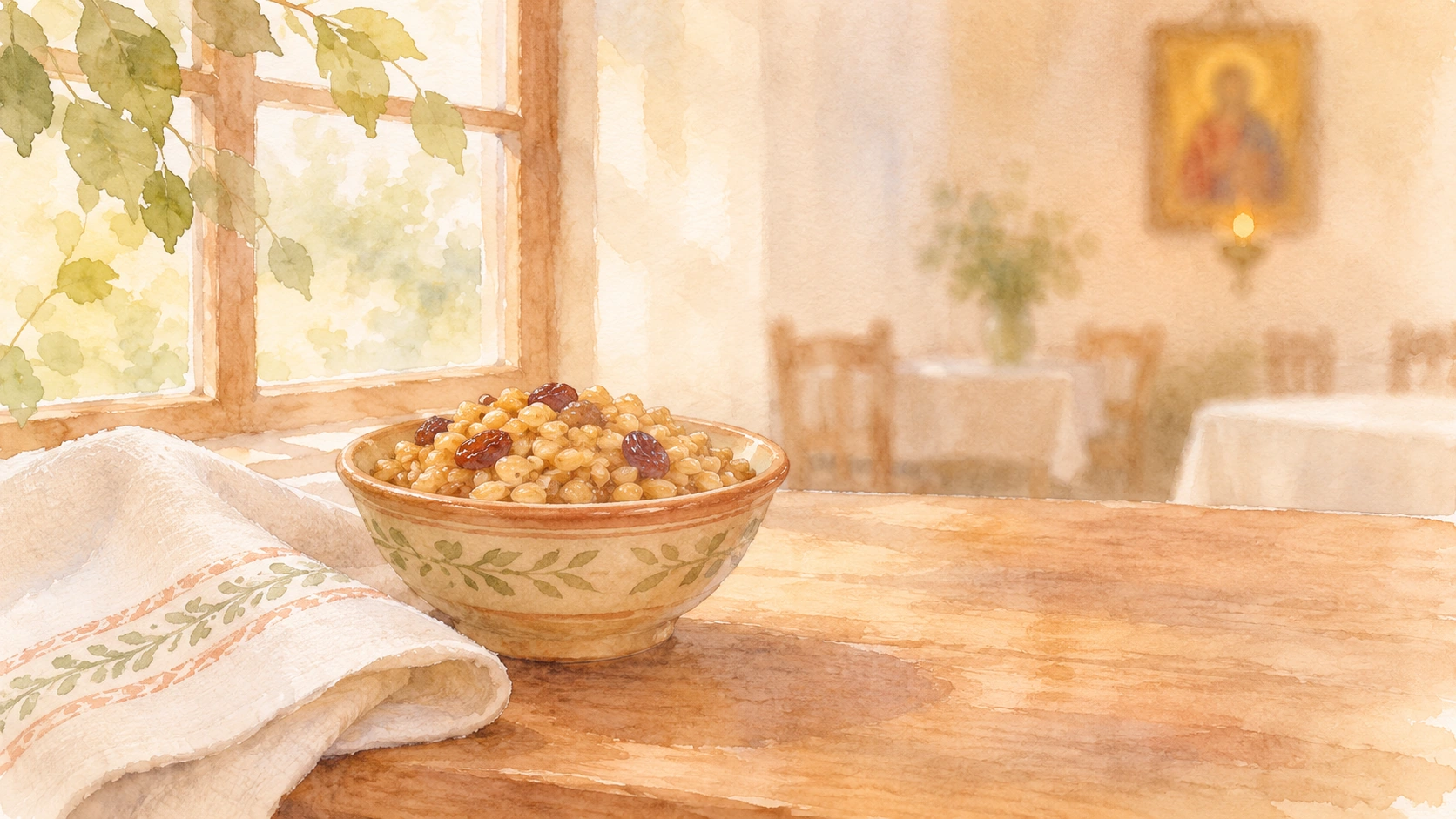
You are arranging a memorial meal with your relatives, and the advice varies: one person insists on the exact date, another on a particular menu. At a time like this, you want a calm explanation of what matters.
A memorial meal is usually held on the day of the funeral, on the ninth and fortieth days after death, and on the anniversary. You can gather a day earlier or later. Prayer for the person who has died is central to Orthodox remembrance, rather than the size of the meal or the dishes served.
When are memorial meals held?
The funeral day, the ninth and fortieth days, and the anniversary are customary occasions to gather and remember someone you love. But you can pray for them on other days too. You do not have to wait for the next date or invite guests.
If this is your first time arranging a memorial meal, start simply: discuss with your family when you can be together. Also make room for prayer at home and at church. A meal brings people together, but does not itself replace prayerful remembrance.
Can you hold the meal earlier or later?
Yes, you can move the memorial meal a day earlier or later. For example, if relatives cannot easily travel on the day itself, choose a time when they can gather without rushing. Try not to let the choice of day become a family argument.
Moving the meal does not prevent you from praying on the day of remembrance. You can tell your family beforehand: we will pray for our loved one on that day and meet for the meal tomorrow. If you still have questions about remembrance in church, ask your parish priest.
Where do you begin?
Begin with prayer for the person who has died. At church, you can submit their name for prayers for the departed and ask about a panikhida, a memorial service. If you do not know how to submit a name or when a panikhida is held, simply ask at the church.
You can also pray at home and quietly remember your loved one. Do not try to arrange everything at once if you have little energy. A modest family meal does not mean less love, and a lavish table does not measure the depth of remembrance.
What food is served?
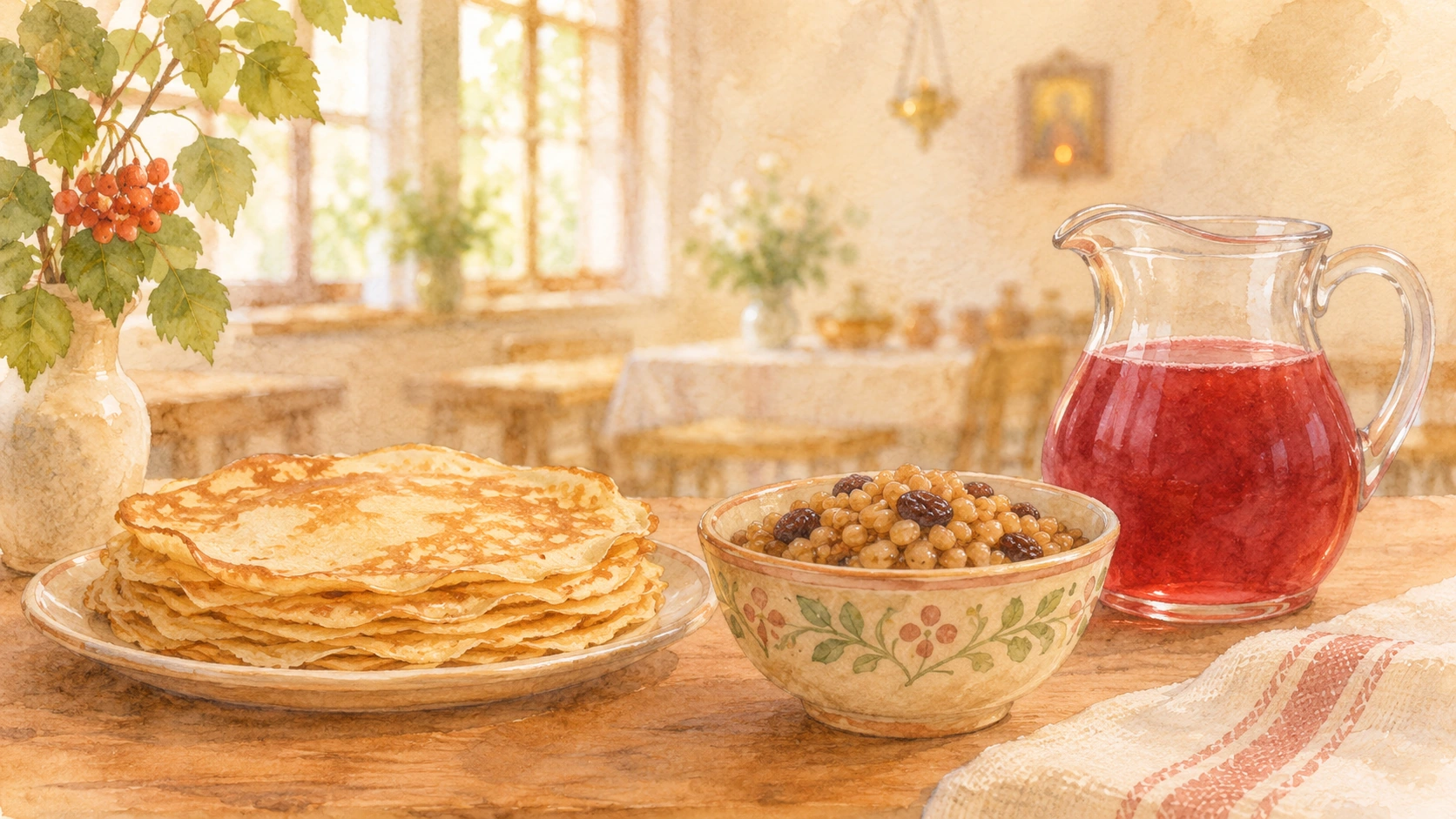
Kutya, a sweet grain dish, pancakes and kissel, a thick fruit drink, are traditional memorial foods. These are customs, rather than a required menu on which remembrance depends. You can prepare a simple meal within your means, without lengthy cooking and extra work.
During a fast, the memorial meal follows the fast. Choose suitable dishes and bear this in mind when preparing familiar foods. If you are unsure about a particular day, check the Church calendar or ask at church. You do not have to prove your love for the deceased through the amount of food.
What can you give away in remembrance?
Giving food and belongings to people in need in memory of the deceased is a good deed. Think about who could use your help. Attention to the person matters more than a particular selection of food or objects. You do not need to find an item that must be given to every guest.
How can you avoid superstitions and extra work?
Beliefs about special ways to handle spoons and the custom of leaving vodka for the deceased are superstitions, rather than Church rules for memorial meals. If your relatives are used to them, you can gently explain that you want to focus on prayer and loving remembrance.
- Agree on a day for the meal and let your family know if you move the gathering.
- Set aside time for prayer; ask at church about submitting a name and a panikhida.
- Prepare a meal within your means, following the fast when applicable.
- If you can, help those who need food or belongings.
Let the preparations leave you time to be with those you love. You can read about the ninth and fortieth days and how to pray for the departed. If your question remains unanswered, you can ask Father Peter.