
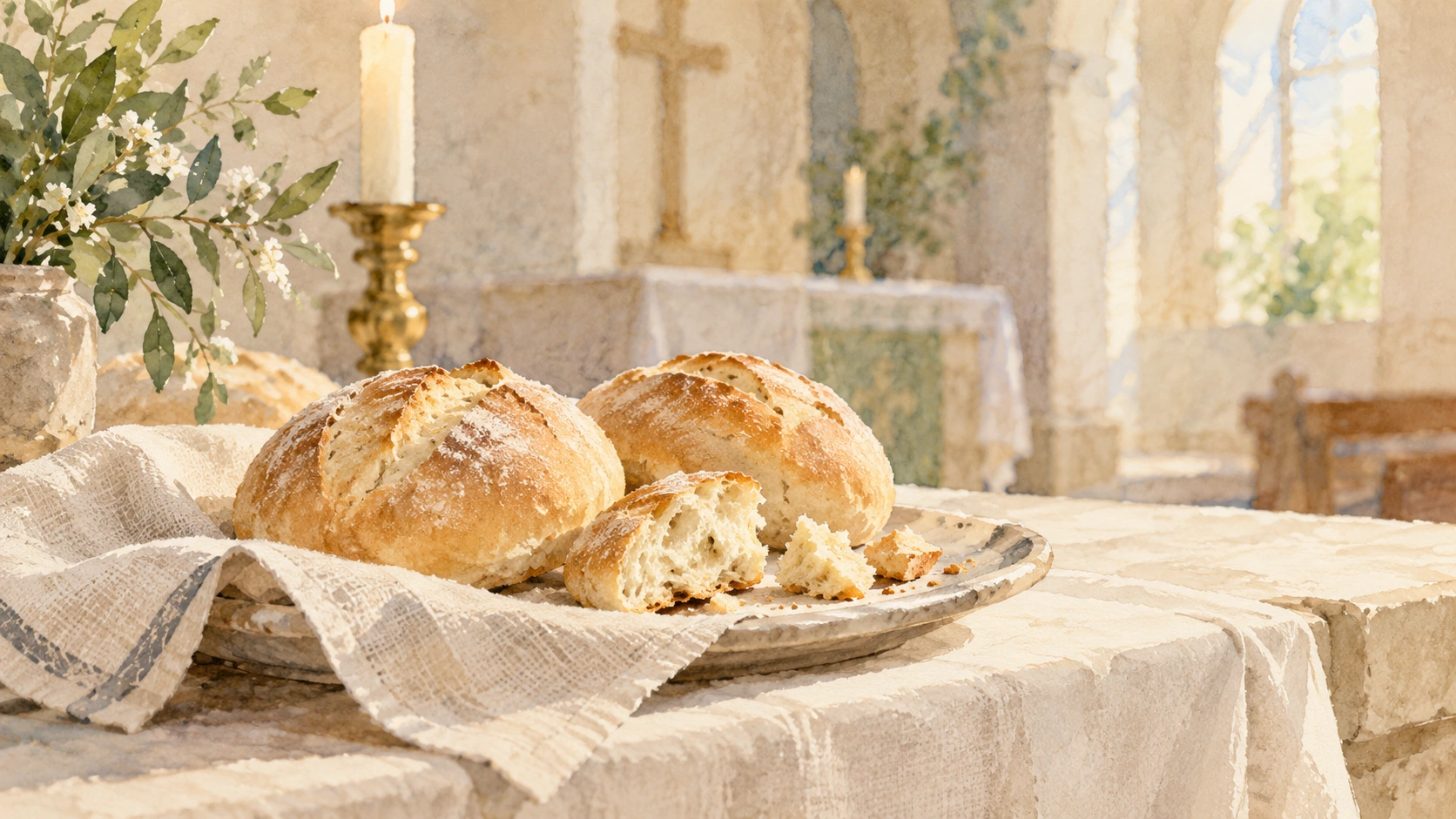
At the end of a service someone offers you a piece of bread. Nearby, another person collects a small round loaf. If you are new to an Orthodox church, it is easy to assume that all of this is the same thing, or even that this is how Communion is received. The distinctions matter, and you can learn them without embarrassment.
What prosphora means
Prosphora is the bread offered for the Eucharist. Before the public part of the Divine Liturgy, the priest prepares the bread and wine in a service called the prothesis, also known as the proskomedia. A portion called the Lamb is cut from the offering bread for consecration in the sacrament.
The living and the departed are also commemorated during this preparation. In some parishes people submit names with offering loaves and later receive a loaf back. Ask about your parish’s arrangements rather than assuming every community follows an identical outward practice.
What antidoron is
Antidoron is blessed bread distributed in connection with the Liturgy. It comes from the bread of the offering but is not the consecrated Body of Christ. It is received respectfully, yet eating it does not replace receiving Holy Communion.
For a newcomer, that is the most important distinction. Receiving a piece of bread after the service and receiving Communion from the chalice are different things. If you do not know what a queue is for, ask an attendant or the priest before joining it.
Receiving it respectfully
Approach calmly and follow the arrangements in that parish. Do not reach into a communal basket if someone is distributing the bread. If you are unsure whether you may receive it, say so. Practices concerning visitors differ, and the local priest can explain what is appropriate.
You do not have to eat something that is unsafe for you. If you have an allergy, coeliac disease, or another medical restriction, you may decline and explain why. Reverence does not require putting your health at risk.
Taking a loaf home
Treat it with care. Use a clean container and avoid leaving it among rubbish or miscellaneous items. Do not collect more than you can use. If bread spoils, ask your parish how to dispose of it respectfully; do not eat food that is no longer safe because you fear being irreverent.
Families may have a customary way of eating prosphora prayerfully. If someone gives you an elaborate set of frightening prohibitions, ask your priest rather than trying to assemble rules from conflicting advice.
A useful question
“What bread is being given out, and how is it connected with the Liturgy?” is a good place to begin. Understanding the context is more helpful than memorizing unfamiliar words in isolation. You can also Ask Father Peter before your next visit.