
Deciding to be baptised as an adult can leave you with a very practical question: where do I go, and what do I say? You do not need to begin by shopping for a cross or choosing a date. Start by finding a parish and arranging a conversation with its priest.
Begin with a conversation
You can simply say, “I have not been baptised, and I would like to understand how to prepare.” Explain what has brought you to the Church and what you are unsure about. Honest questions are more useful than pretending that everything is already clear.
If you do not know whether you were baptised as a child, say so. If you were baptised in another Christian community, tell the priest. Reception into the Orthodox Church takes account of a person’s previous baptism; do not decide on your own that it must be repeated.
What is catechesis?
Catechesis means learning the Christian faith and beginning to enter the Church’s life. Someone preparing for baptism may be called a catechumen. The purpose is to understand who Christ is and what prayer, repentance and worship mean in daily life.
This is more than completing a form, but it is not a test of obscure vocabulary. Ask your parish about the meetings and the time involved. Preparation needs to take your circumstances into account, so a fixed timetable found online cannot tell everyone when they will be ready.
Reading and prayer
Begin with a manageable passage from a Gospel each day. Keep your questions instead of trying to finish the whole Bible at once. Our beginner’s Bible reading plan offers a possible starting point.
Read the Creed as well. It expresses the faith confessed at baptism. Understanding matters alongside learning the words; our introduction to the Creed can help you prepare questions. You can already begin to pray, including a short, honest prayer in your own words.
Attending before baptism
You can attend services while preparing. Choose a place where you can follow what happens without worrying about copying every gesture. Attending the Liturgy and receiving Communion are different: do not approach the chalice before reception into the Church.
Returning a few times helps you get to know the community. Baptism opens into an ongoing Christian life; it is worth thinking about where you will continue to worship and learn afterwards.
Practical arrangements
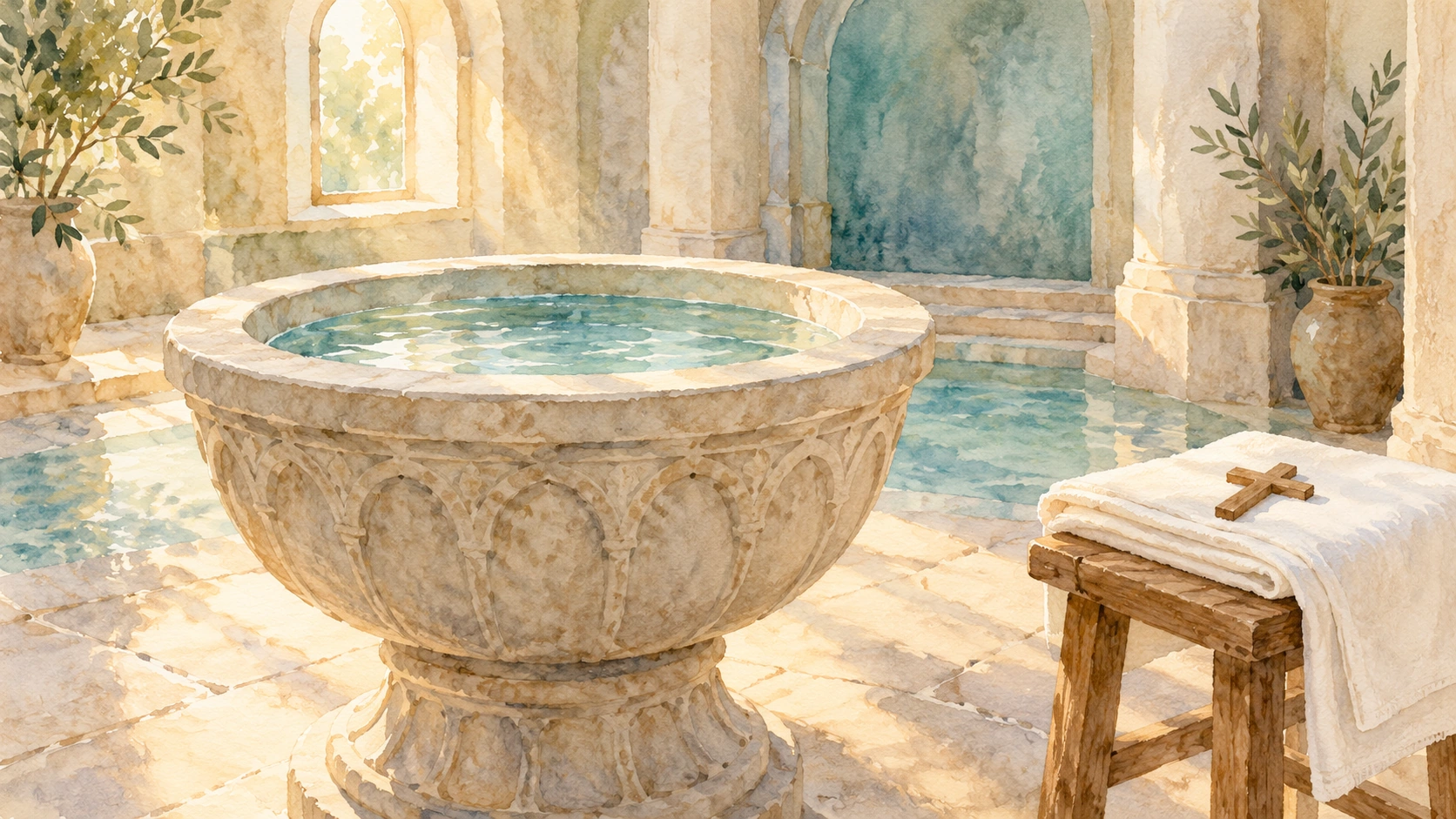
Ask about a sponsor, your baptismal name, clothing, a towel, a cross and when to arrive. Follow the arrangements of the parish rather than buying everything on an internet checklist. Discuss mobility needs, health limitations or anxiety about immersion beforehand.
Ask the priest about fasting and sacramental preparation. Do not independently stop medication or impose restrictions that are unsuitable for your health.
For today, one step is enough: find out when your local parish offers adult instruction and write down two questions. You do not have to understand everything before you begin learning. For help exploring a first question about faith, you can Ask Father Peter.