Many people recognise the Lord’s Prayer even if they rarely enter a church. Yet familiar words are not always understood words. Why say “our” when praying alone? What is daily bread? Must a particular feeling come before we can pray?
The Lord’s Prayer: full text
This is the traditional English form of the prayer:
Our Father, who art in heaven, hallowed be Thy name. Thy kingdom come, Thy will be done, on earth as it is in heaven. Give us this day our daily bread, and forgive us our trespasses, as we forgive those who trespass against us, and lead us not into temptation, but deliver us from evil.
The Lord’s Prayer in the Gospel
In the Gospel of Matthew the words are given as follows:
«In this manner, therefore, pray: Our Father in heaven, Hallowed be Your name. Your kingdom come. Your will be done On earth as it is in heaven. Give us this day our daily bread. And forgive us our debts, As we forgive our debtors. And do not lead us into temptation, But deliver us from the evil one. For Yours is the kingdom and the power and the glory forever. Amen.»
Gospel of Matthew / Chapter 6 / Verses 9–13
In Russian churches the prayer is said in Church Slavonic; at home you can pray in your own language. Below is what its main words mean.
Where does it come from?
Christ teaches His disciples to pray in Matthew, chapter 6, verses 9–13. A related passage appears in Luke, chapter 11, verses 2–4. This is why it is called the Lord’s Prayer. The full text is above; other prayers are in the prayer collection.
The prayer addresses the Father and asks for His kingdom and will, what is needed for life, forgiveness and deliverance from evil. Seeing the whole movement helps prevent an unfamiliar expression from becoming the entire focus.
Father and our
Christ teaches us to address God with trust as Father. This does not mean imagining God as a larger version of a human parent. Painful family experiences deserve care and conversation, rather than pressure to produce a warm emotion immediately.
“Our” also matters. Even alone, we do not pray as though nobody else existed. Before listing our own needs, we can remember that our life belongs alongside the lives of others.
God’s kingdom and will
These requests turn attention towards living before God. They do not instruct us to call evil good or abandon responsibility for our choices.
“Thy will be done” is not permission to neglect someone who is ill or accept cruelty without seeking help. Trust can accompany treatment, protecting a vulnerable person or admitting an error. Prayer reaches into action.
Daily bread
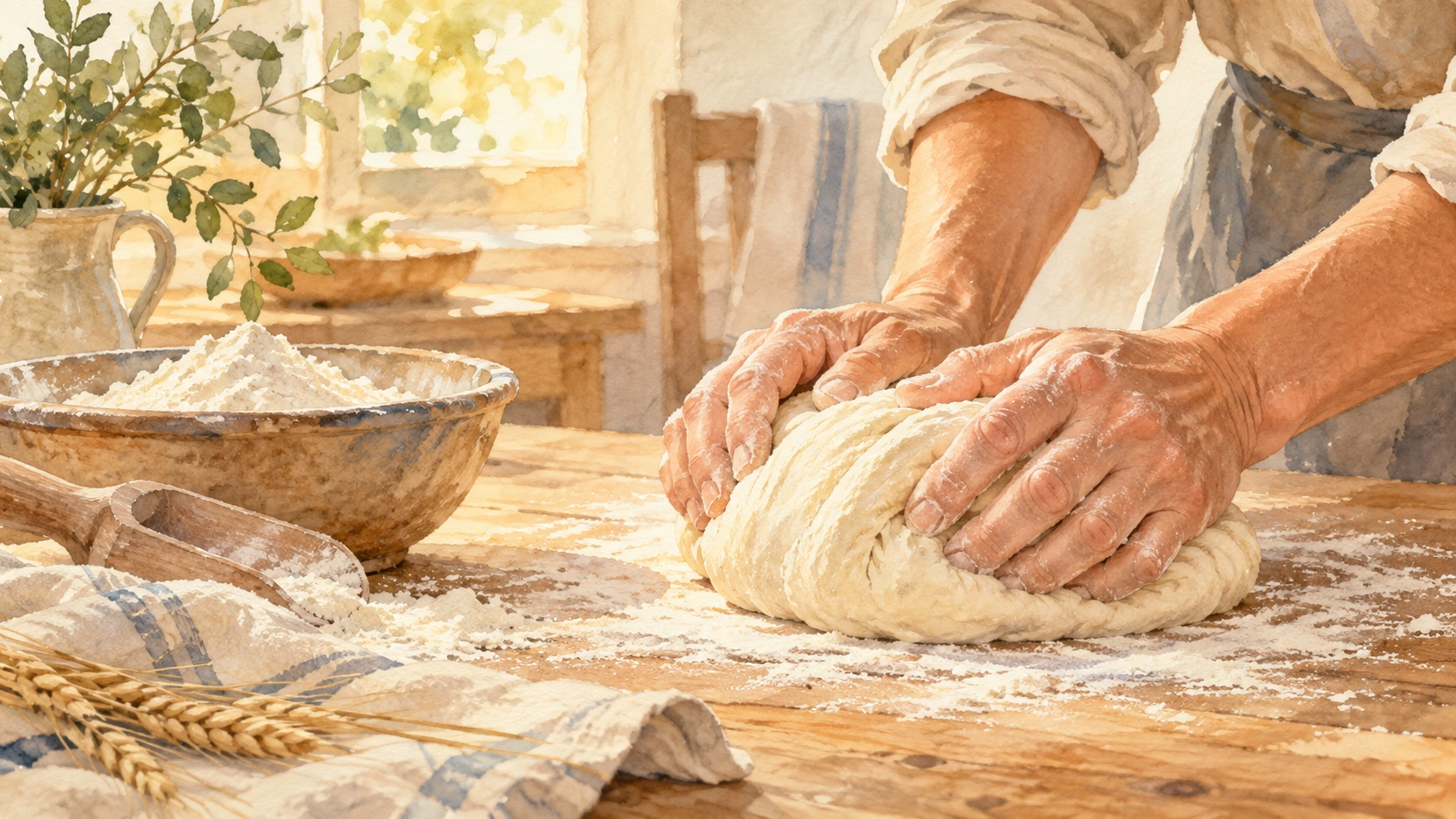
This petition brings the needs of ordinary life into prayer. There is no reason to be ashamed that food, work or caring for a household matters to us. Yet the words ask for bread for us, not merely for me.
A beginner need not settle every theological interpretation of bread in one evening. Start by hearing trust and shared need. Our neighbour’s practical circumstances belong within our concern too.
Forgiveness and our relationships
The prayer’s language of debts or trespasses points towards sins and the forgiveness we ask from God. It also asks us to attend to our treatment of people who have wronged us.
Forgiveness does not make harm unreal or require returning to danger. A first step may be refusing revenge and seeking support, rather than instantly feeling reconciled. The words can expose a question we need to work through patiently.
A way to begin today
Read slowly, without judging sincerity by emotion. Choose one petition and consider where it touches your day. Return to another tomorrow. This is a suggestion for learning, not a compulsory prayer rule.
A clear modern explanation can help with older English expressions. There is no need to race through the prayer to prove familiarity. If a phrase still puzzles you, you can Ask Father Peter. Attentive prayer can begin with one honest question and a willingness to understand.