You have received Communion and notice that some people stay in church to listen to prayers. Perhaps you do not yet know what is being read or whether you can read it at home.
After Communion, you read the “Prayers of Thanksgiving after Holy Communion.” They are read in church at the end of the Liturgy or at home, and you can find them in every Orthodox prayer book. Their purpose is to thank God for the Communion you have received.
What are these prayers?
In the prayer book, they form a separate section under a shared title. The traditional Russian wording means “after Holy Communion.” If you are looking for thanksgiving prayers after Communion, this is the section you want. You do not have to memorize an unfamiliar title straight away: find it in the contents and add a bookmark.
Here we name the prayers; use a prayer book to read them. That way, you will have the whole section in front of you and can read it calmly in order. If you are opening the book for the first time, ask someone to help you find the place. There is no need to feel awkward about asking.
When to read them: in church or at home
In church, the thanksgiving prayers are read at the end of the Liturgy. If you would like to stay and listen, ask beforehand where they will be read. This is especially helpful when you are still finding your way and worry about missing the beginning: you will not have to guess by watching other people.

You can also read the prayers at home. When you return, find a quiet place, open the right section and put your phone aside if it distracts you. Try to avoid rushing just to get to the end. Give yourself a chance to pay attention to what the words mean.
Why give thanks after Communion?
Before Communion, you prepared to meet Christ. Afterwards, prayer continues with thanksgiving. This helps you avoid jumping straight from the service to messages, shopping and conversations. You can slow down a little and remember why you came to church.
You do not need to summon a special feeling or compare yourself with the people beside you. Attentive reading does not require a particular mood. Begin simply: open your prayer book, read without rushing and return to the words when you notice that your thoughts have wandered.
What to do straight after Communion
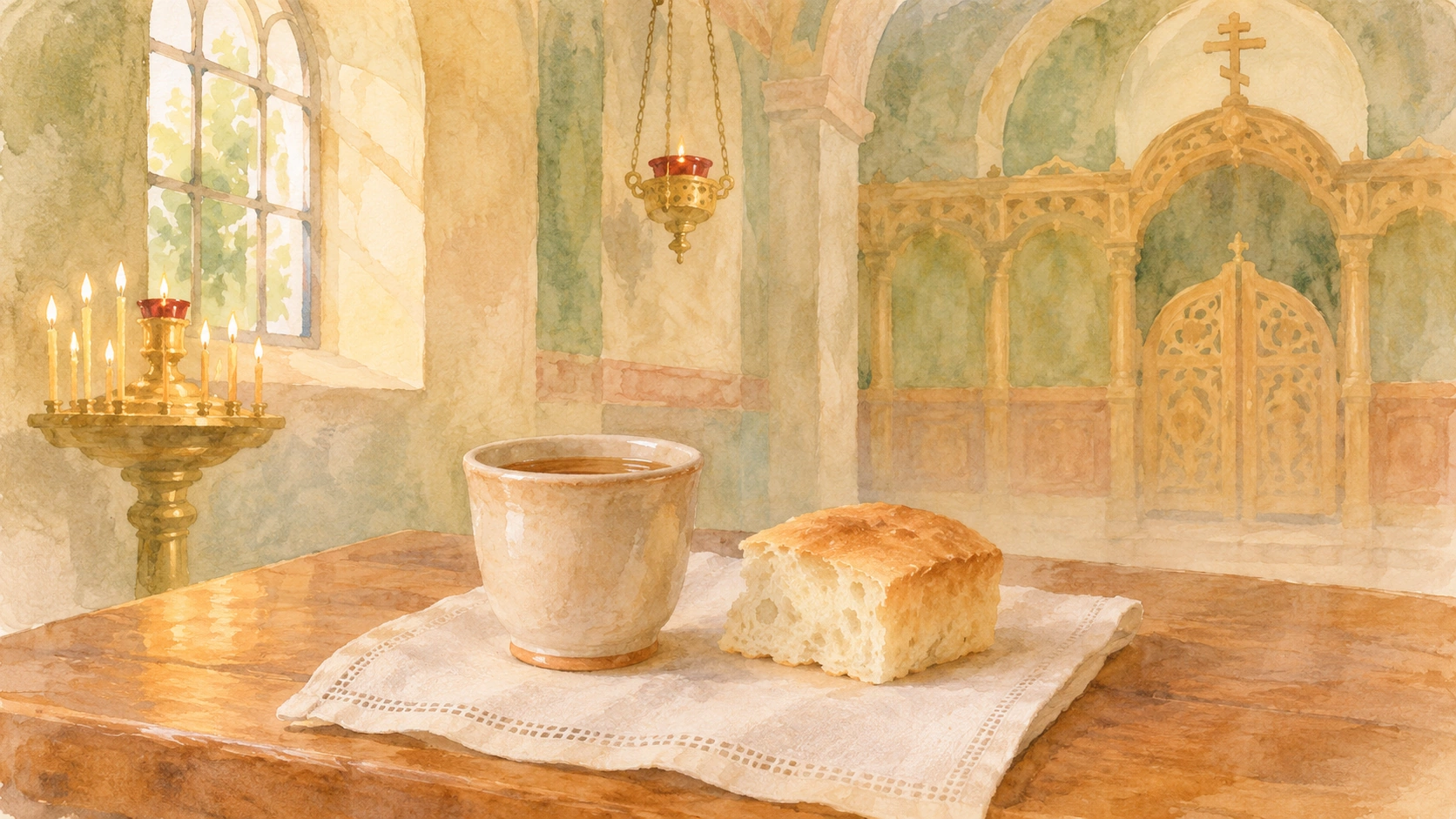
After Communion, you go to receive the drink offered afterwards and eat prosphora or antidoron. If this is your first visit and you do not know where to go, simply ask someone serving in the church. You can also ask beforehand where the thanksgiving prayers will be read, so you will not have to look for the place in a hurry.
How to spend the day peacefully
Try to keep a calm pace after returning home too. You may have everyday tasks, loved ones to care for or a journey ahead. Think about where you can avoid unnecessary bustle: leave a pointless argument aside, give your family time, pause before a sharp reply. These are simple ways to approach the day with more care.
- Receive the drink offered after Communion and eat prosphora or antidoron.
- Listen to the thanksgiving prayers in church at the end of the Liturgy or read them at home.
- Find the section in your prayer book beforehand if you plan to read at home.
- If possible, leave some time for quiet and unhurried activities.
If you are still learning about the order of prayers, read what to read before Communion and what prosphora and antidoron are. If you would like to ask about your own situation, you can ask Father Peter. You do not have to know everything before asking a simple question.