You are preparing a memorial meal and remember that you need kutya, but you do not have a family recipe to hand. On a day like this, you want to cook calmly, without complicated rules or fear of getting something wrong.
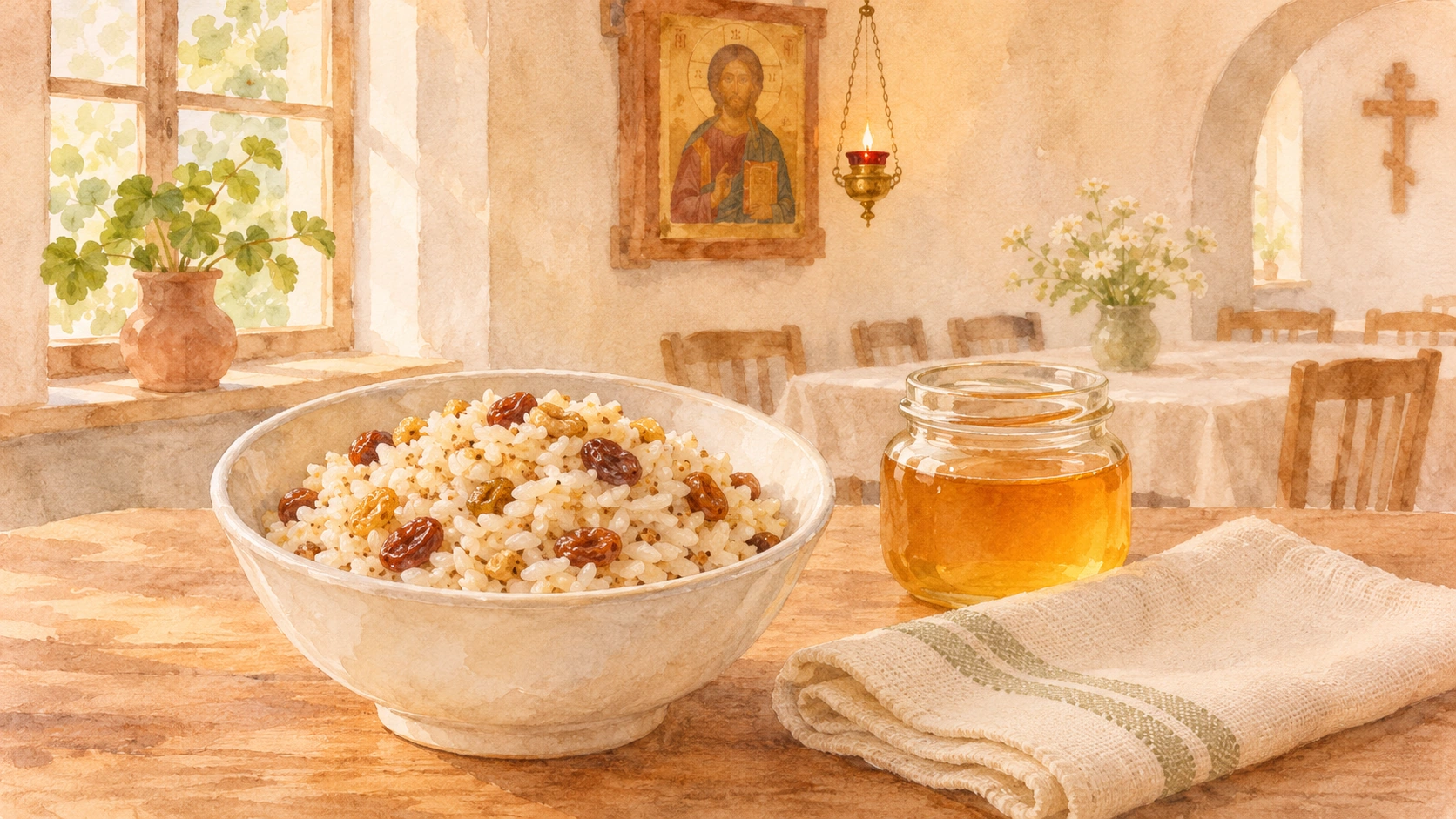
Kutya is cooked wheat or rice with honey and raisins; you can add nuts if you wish. To make kutya for a memorial meal, cook the grain until tender, soften the raisins separately and mix everything with honey. The grain in this dish recalls the resurrection.
What kutya means at a memorial meal
It looks like a simple sweet dish, but the grain has a Christian meaning. A grain sown in the earth gives rise to new life. Kutya on the memorial table therefore recalls the hope of the resurrection of the dead. In the Gospel of John, Christ says:
«Most assuredly, I say to you, unless a grain of wheat falls into the ground and dies, it remains alone; but if it dies, it produces much grain.»
Gospel of John / Chapter 12 / Verse 24
This image helps you see what matters beyond preparing the meal: remembering the person and praying for them. You can make the simplest dish and remember your loved one with love. Beautiful decoration does not measure your love, and a successful recipe does not replace prayer.
What to have ready
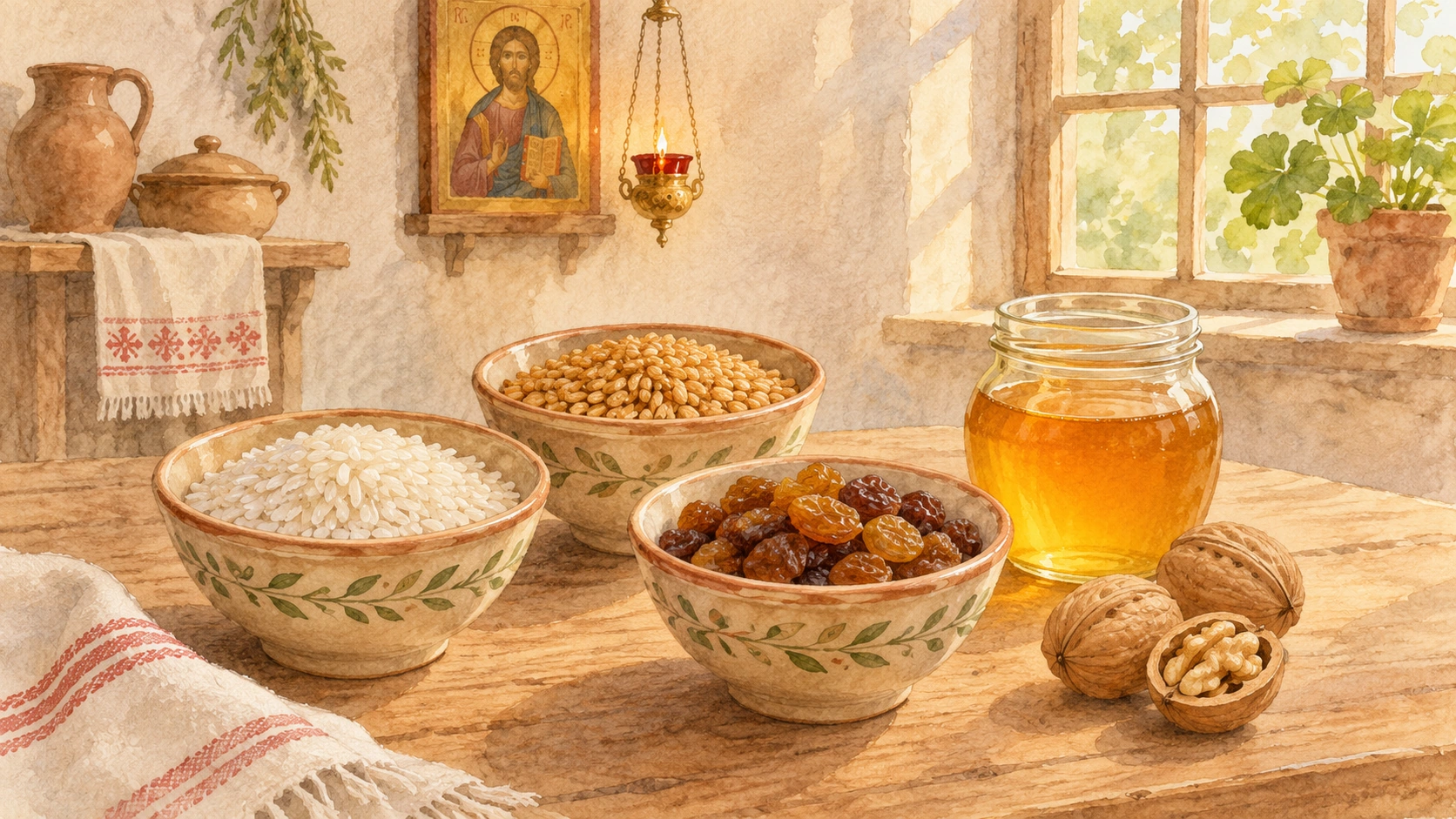
- Rice or food-grade wheat for cooking: choose whichever you are more used to preparing.
- Honey and raisins, in amounts to suit your taste.
- Nuts, if you wish to add them.
- Water, a saucepan, a sieve and a serving bowl.
You do not have to make kutya very sweet from the start. It is easier to add a little honey, mix and taste, then decide whether you want more. Raisins add sweetness too. If you are cooking for a shared meal, ask your family beforehand whether everyone eats nuts, or simply leave them out.
How to cook rice kutya
- Rinse the rice in cool water.
- Add fresh water and cook until tender. Follow the package instructions for the amount of water and cooking time, as these depend on the rice variety.
- Rinse the raisins, cover with warm water and leave until softened. Then drain.
- Let the cooked rice cool a little. If excess water remains, drain it through a sieve.
- Add the honey and raisins and mix gently. Add chopped nuts if you wish.
Taste the finished kutya before serving. If the honey is thick, you can first stir it into a little warm water, then add it to the rice. Pour it in gradually so that the dish does not become watery. Rice kutya can be very plain, without patterns or elaborate decoration.

If you choose wheat
Use food-grade wheat intended for cooking as porridge. Rinse it and check the package instructions: some kinds benefit from soaking beforehand. Cook until tender, checking the grains themselves. There is no single cooking time, because wheat is processed in different ways.
Then follow the same steps as for rice: drain excess water, let the grain cool a little and add softened raisins and honey. Nuts are up to you. Choose whichever version feels manageable on this day.
Can kutya be blessed at church?
Yes, kutya can be blessed at a panikhida, an Orthodox memorial service. If you want to bring it, ask your church beforehand when the service will take place and where to put the bowl. A container with a lid is useful for the journey. This will let you focus calmly on prayer without worrying about the dish.
Let the cooking be a manageable act of care. If you need more guidance, read about praying for loved ones who have died and submitting prayer names at church. If something is still unclear, you can ask Father Peter.