You are invited to visit during Svyatki, while someone else suggests fortune-telling “as a tradition.” It can be confusing: what belongs to Christmas, and how can you spend these days?
Svyatki are the holy days from Christmas to the eve of Theophany: January 7–17 inclusive. January 18 is Theophany Eve itself. This is a time for Christmas joy, visits and helping others; there is no fasting during Svyatki, even on Wednesdays and Fridays.
When do Svyatki begin and end?
Svyatki begin with the Nativity of Christ on January 7. The joy of the feast continues beyond Christmas Day: you can spend time with loved ones, greet those you have not yet reached and make time for an act of kindness. The word “Svyatki” itself refers to holy days.
When planning visits and festive meals, keep the boundary in mind: January 17 is the final day of Svyatki, and January 18 is Theophany Eve. It should not be treated as another day without fasting. You can find feast days in the Church calendar.
What do you do during Svyatki?
People visit one another, welcome loved ones, help those who need support and sing Christmas carols. Caroling means bringing Christmas greetings and singing Christmas songs. If you would like to join in, agree with your friends beforehand on whom you will visit and whether the timing suits your hosts.
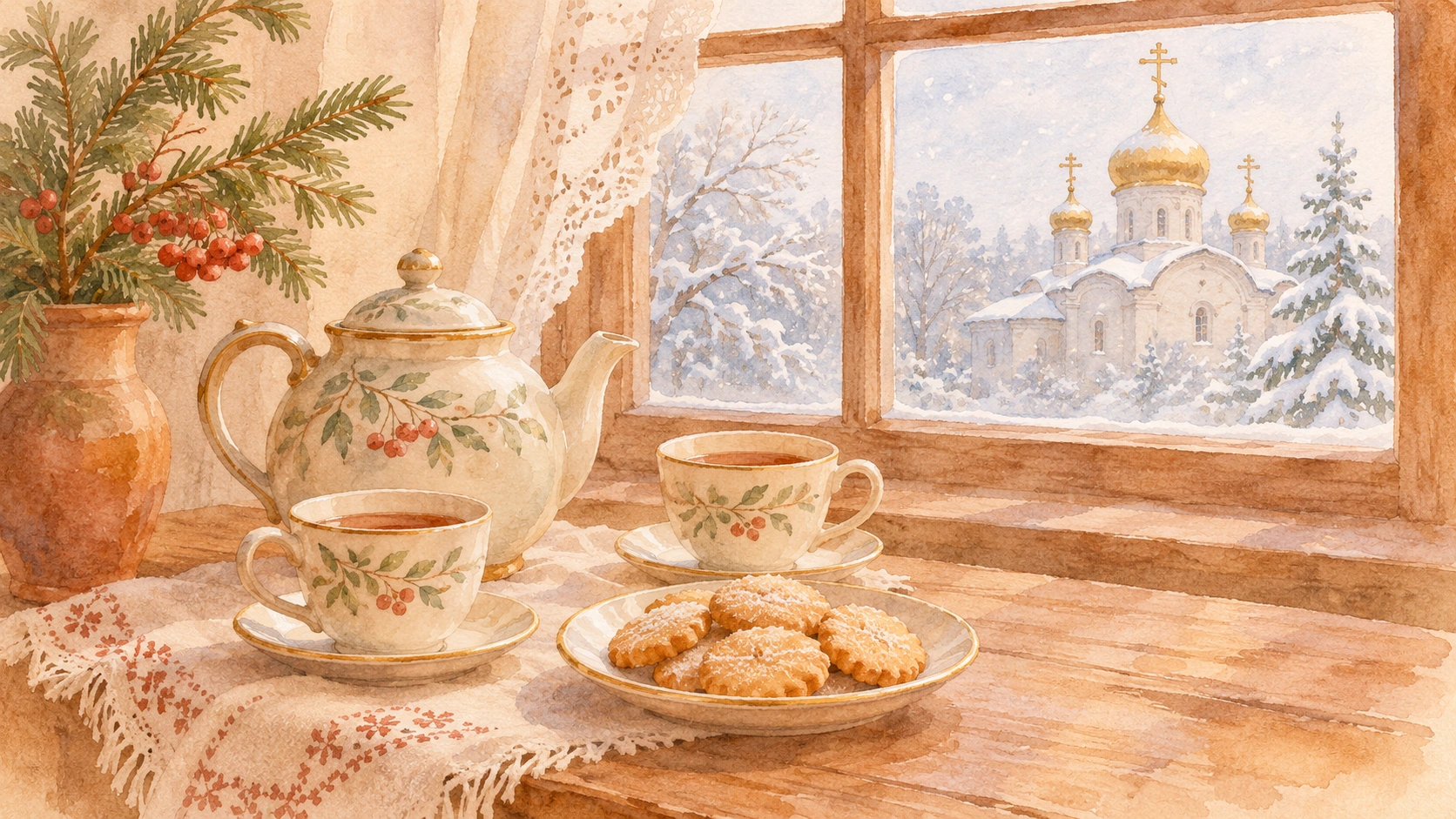
A large meal and a lively crowd do not suit everyone. You could invite someone for tea, call a relative or bring groceries to someone who finds it hard to leave home. Ask first what help would be welcome. You can choose something manageable even if you have very little free time.
Do you fast on Wednesdays and Fridays?
No, the usual Wednesday and Friday fast does not apply during Svyatki. You can share festive food with your loved ones without worry. Joy does not require overeating or long meals: choose what suits you, and do not press guests to eat more than they want.
Prayer can also be part of these days: you can go to church, thank God for Christmas and pray at home. If you are just getting to know church life, do not try to plan a full schedule straight away. Begin with what you understand and can manage now.
Why is fortune-telling not part of Svyatki?
Fortune-telling is a sin, and these holy days do not make it acceptable. Trying to discover the future through divination does not become part of a Church feast because someone calls it an old custom. Caroling and fortune-telling are different things: you can share Christmas greetings, but should avoid seeking predictions.
If friends invite you to tell fortunes, you can calmly decline and suggest something else: singing a Christmas song, having tea or talking. You do not need an argument to say no. If you have already taken part and now feel troubled, you can speak honestly about it with a priest in confession.
Can you have a church wedding, and how can you plan these days?
Church weddings are not celebrated during Svyatki. If you are choosing a wedding date, discuss it with your church in advance. The absence of fasting during these days does not in itself mean that a church wedding is possible.
- Arrange a visit with loved ones at a time that suits everyone.
- Choose a simple way to help: bring groceries, help around the house or listen.
- If you want to go caroling, prepare Christmas songs and arrange your visit.
- Leave time for prayer and quiet rest, without rushing to fit in every festive activity.
May you find room for a warm visit and a small act of kindness. Read more about fortune-telling and omens and preparing for a church wedding. If you have a personal question, you can ask Father Peter.