You are packing for your baby’s baptism and worrying that you might forget something important. You want to know what will happen at church and how the godparents can prepare.
A child’s baptism usually takes 40–60 minutes. Baptisms can take place on any day, including during a fast, but you arrange the date and time with the church. Start by preparing a cross, a baptismal shirt, a towel and your child’s details; check the specifics when booking.
Where to start preparing
Contact your chosen church and explain that you would like your child to be baptized. Ask how to arrange a time, what to bring and how parents and godparents can prepare. Write down the answers: this makes it easier to check your bag calmly before leaving home.
Many churches hold a preparatory conversation for parents and godparents. You can discuss the meaning of the sacrament and ask questions about the rite itself. Check the arrangements beforehand so that preparation does not become a last-minute rush.
What you need for a child’s baptism
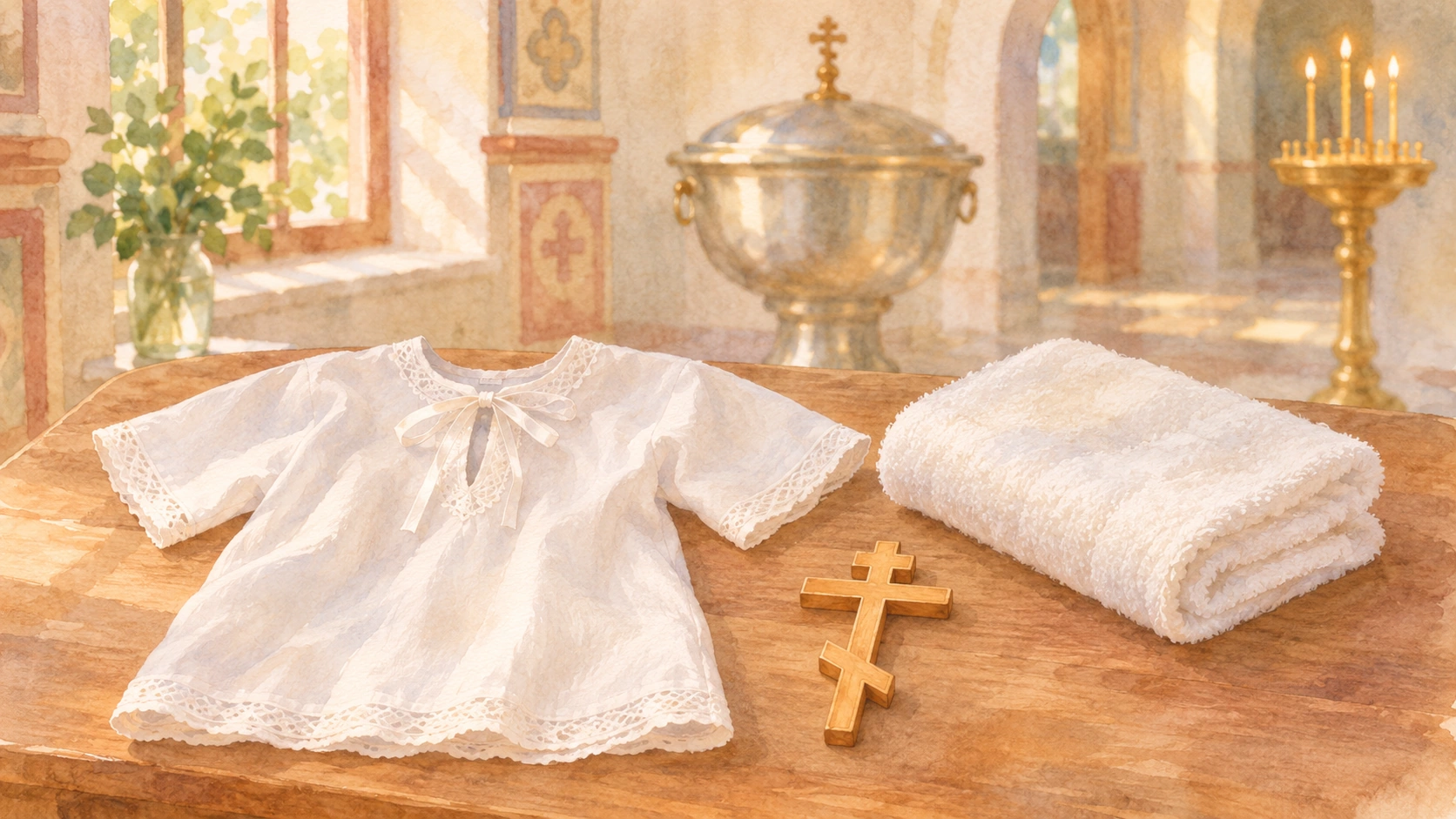
- A cross to wear — ask at the church if you are unsure which to choose.
- A baptismal shirt — pack it with your baby’s other things.
- A towel — to dry your child after the font.
- Your child’s birth certificate and name — ask what details are needed when booking and what name will be used at baptism.
Try not to guess every local detail from other people’s experiences. If someone sends you a long shopping list, discuss it with the church first. Getting a clear answer to your own question is more helpful than worrying about unfamiliar terms or conflicting advice from relatives.
How the rite takes place
The rite has several main parts. Knowing their meaning will help you follow what is happening. This is a brief guide: during the baptism, listen to the priest and ask if you do not understand what to do next.
- Renouncing Satan and turning to Christ. The godparents answer on behalf of an infant.
- The Creed. It professes the Christian faith; it is worth becoming familiar with its meaning before the baptism.
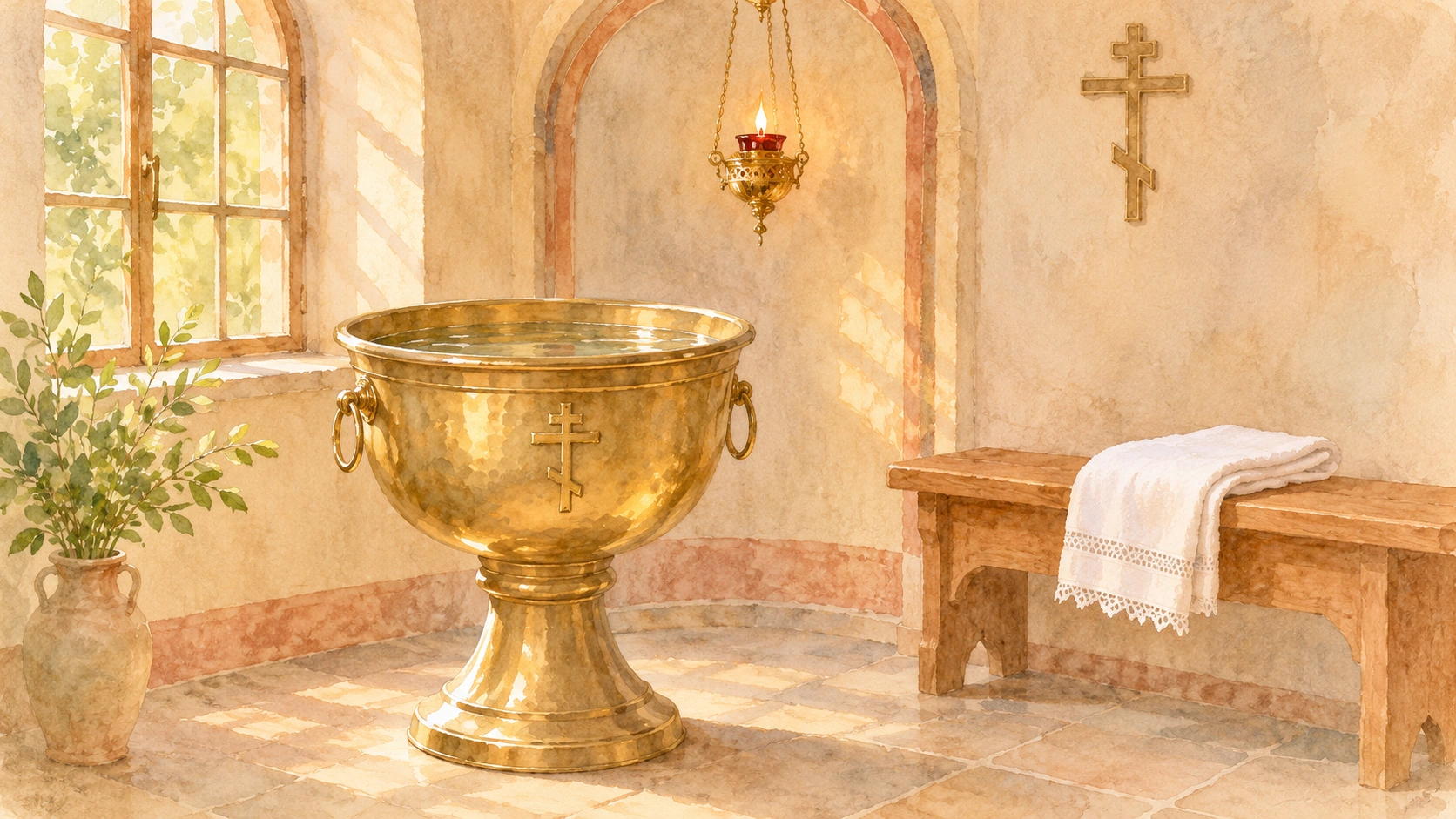
- Immersion in the water of the font — the central moment of baptism.
- Chrismation — anointing with holy chrism, associated with the gift of the Holy Spirit.
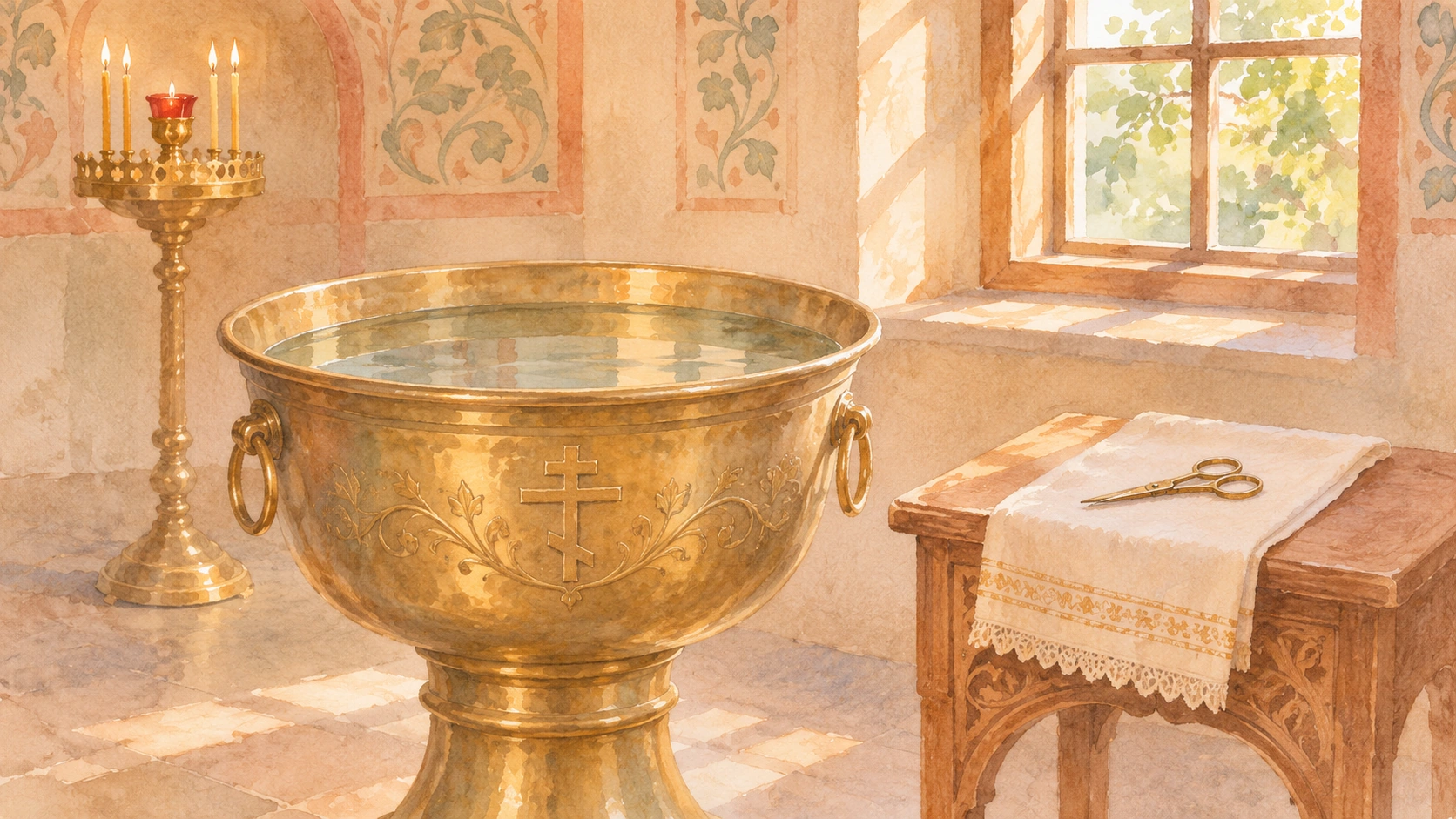
- Tonsure — the priest cuts small locks of hair as a sign of dedication to God.
Baptism is the beginning of Christian life. Preparation therefore includes talking about faith and how the adults will help your child discover it as they grow. During the conversation, you can say openly if you know little about church life yourself.
What parents and godparents can do
Discuss beforehand who will carry the things and where the shirt and towel will be. Godparents need to understand whom they are answering for and why they speak on an infant’s behalf. If anything remains unclear after the preparatory conversation, return to the question before the sacrament begins.
If your child starts crying, calmly tell the priest that your baby needs your help. Do not expect perfect composure from yourself or try to memorize every movement. You can listen carefully to the guidance and care for your child.
What to check before leaving home
- Have you agreed on the date and time of the baptism?
- Have you checked whether a preparatory conversation is needed?
- Have you packed the cross, shirt, towel and documents?
- Have you discussed your child’s name and any remaining questions with the priest?
You can then take your time reading about godparents’ responsibilities after baptism and whether children can be baptized during a fast. If your family still has a question, you can ask Father Peter.