
You are choosing a day for your church wedding and working out how much time to leave between church and meeting your loved ones. You also want to know what will happen so you feel less lost.
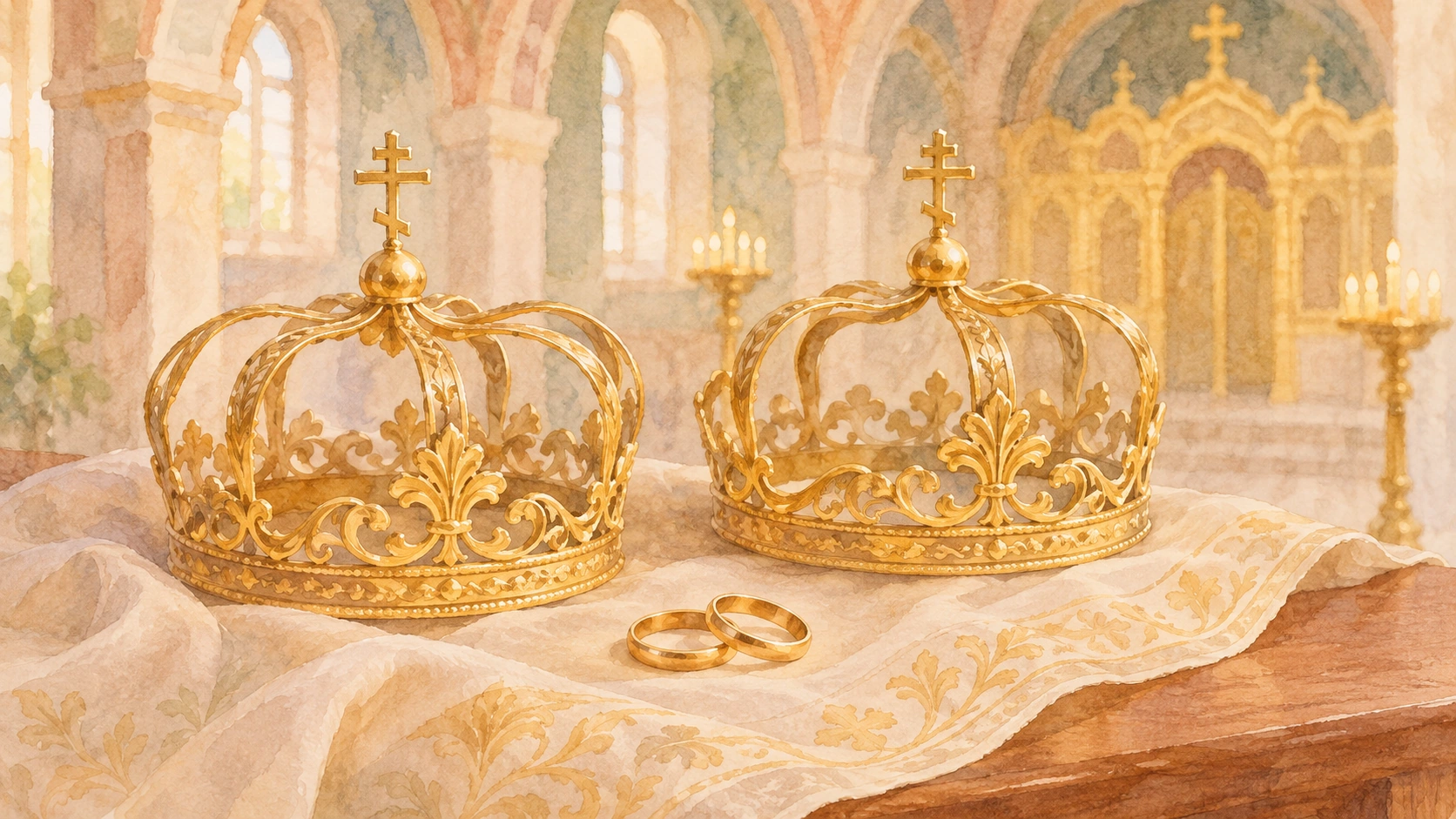
An Orthodox wedding usually lasts 40–60 minutes. It has two parts: the betrothal with rings and the crowning service, with crowns, a common cup and a procession around the lectern. Here is a simple explanation, step by step.
How long does an Orthodox wedding last?
Allow 40–60 minutes, but check the timing with the church where you will be married. This range covers the service itself. Plan separately for travel, the conversation before the service, congratulations and photographs, so you and your loved ones do not feel rushed.
When arranging the wedding, ask what time you should arrive and roughly when you will be free. This makes it easier to coordinate with guests. Try to avoid planning your day so tightly that you have to rush somewhere as soon as the service ends.
How the betrothal begins
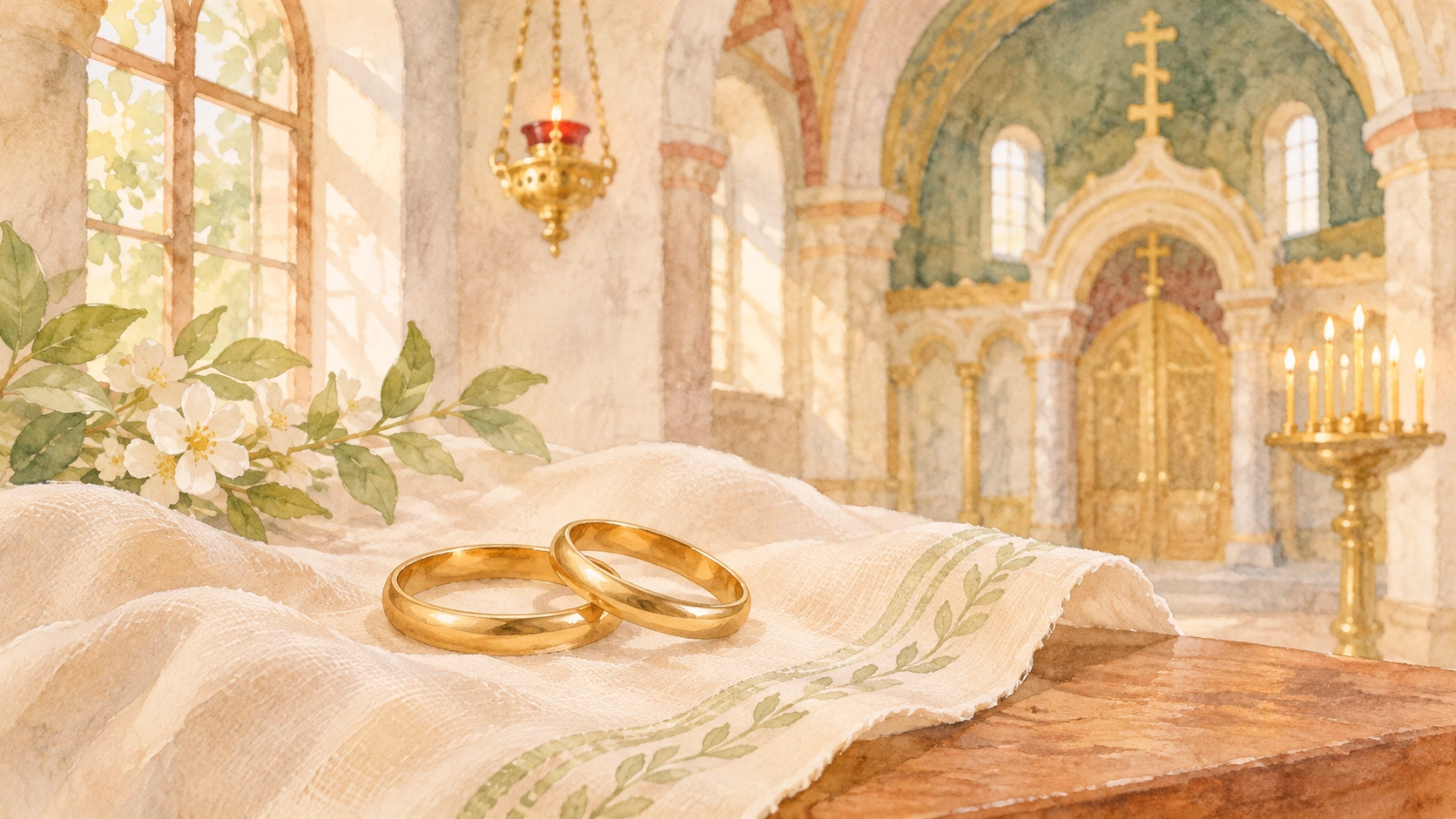
The first part is the betrothal. The priest prays for the couple and betroths them with rings. The rings are a reminder of faithfulness to one another. You stand together before God and join in the prayer for your marriage.
Do not worry if this is your first time seeing the service and you do not know when to turn or where to go. Listen to the priest and his guidance. You do not need to memorize the movements beforehand: simply follow what is happening calmly and join in prayer.
What happens during the crowning service?
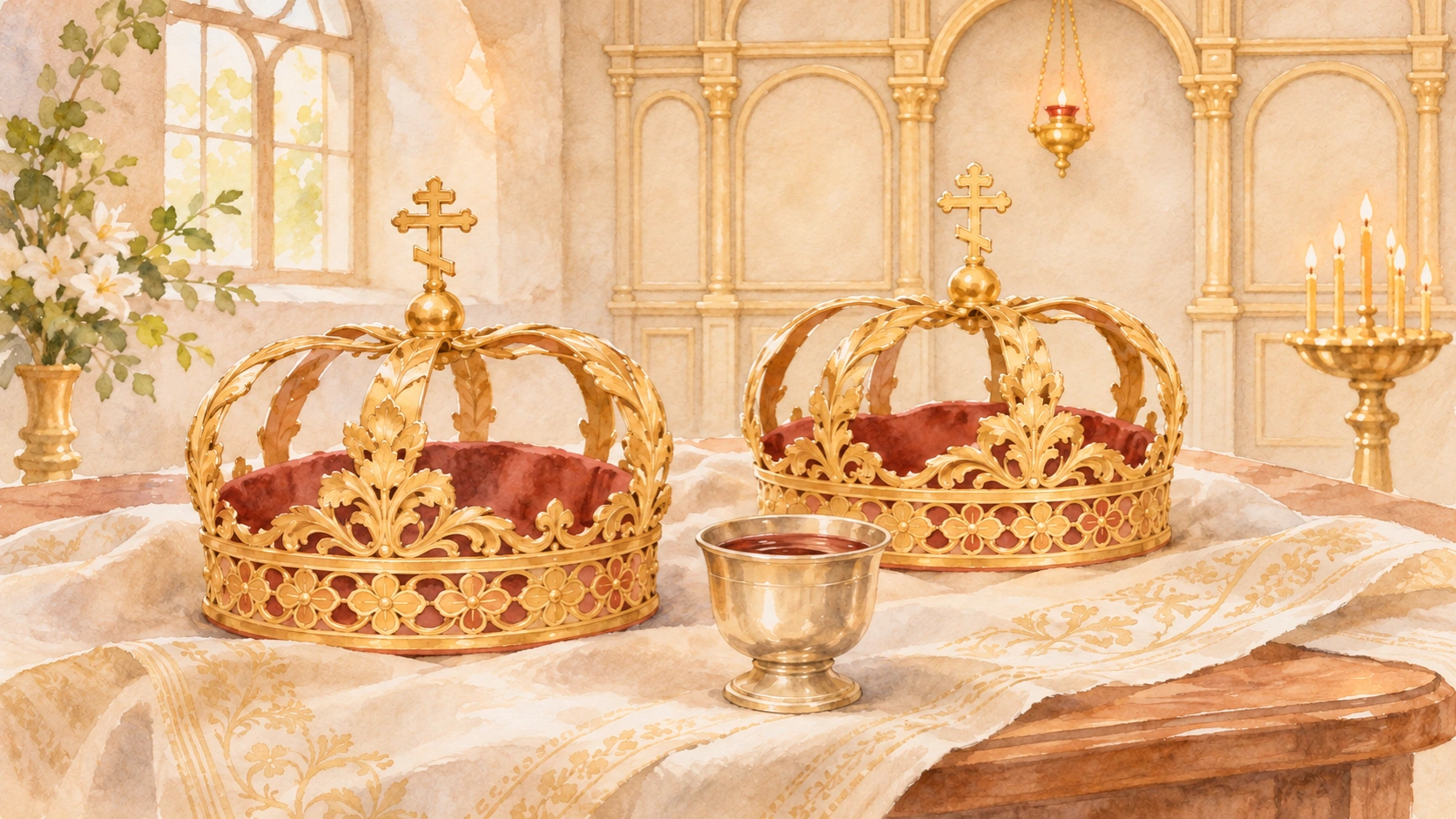
The crowning service begins after the betrothal. Crowns are placed upon the spouses. The Church prays for your life together, love and faithfulness. An Orthodox wedding is the sacrament of marriage, so prayer for your family is at its heart. The beautiful details help convey the meaning of what is happening, but your participation matters too.
During this part, the spouses drink from a common cup. It recalls the life you share, in which both of you will encounter joys and difficulties. The priest then leads the spouses around the lectern, a tall church stand with a sloping top. This procession together is also part of the wedding service.
If a word or action is unclear, remember your question and ask it after the service. You do not need to pretend that everything is familiar. You can ask the priest beforehand to briefly explain the main moments, especially if you rarely go to church.
Which wedding requirements should you discuss beforehand?
For the wedding, you need your civil marriage certificate, and both spouses must be baptized Orthodox Christians. Tell the priest about your circumstances at your first conversation. If you are unsure about the details of your baptism, say so openly, so you can clarify them before the chosen date.
Traditionally, the spouses go to confession and receive Communion on the eve of their wedding. Discuss preparation and timing with the priest in advance. If you have never been to confession or have not received Communion for a long time, you can say that calmly too. Begin with a conversation in which the next steps can be explained.
What to check before your chosen day
Weddings are not celebrated during fasting periods and on certain other days. Agree on a date with the church before inviting guests and making your other plans. This checklist can help you remember what to ask:
- Check whether a wedding can be celebrated on your chosen day.
- Ask when to arrive and how much time to allow for the service.
- Prepare your civil marriage certificate and discuss what else to bring to this church.
- Arrange preparation for confession and Communion.
- Ask any questions about the service that are on your mind.
You can prepare gradually, without rushing. Read more about preparing for an Orthodox wedding and why weddings are not celebrated during fasting periods. If you still have a question, you can ask Father Peter.

