
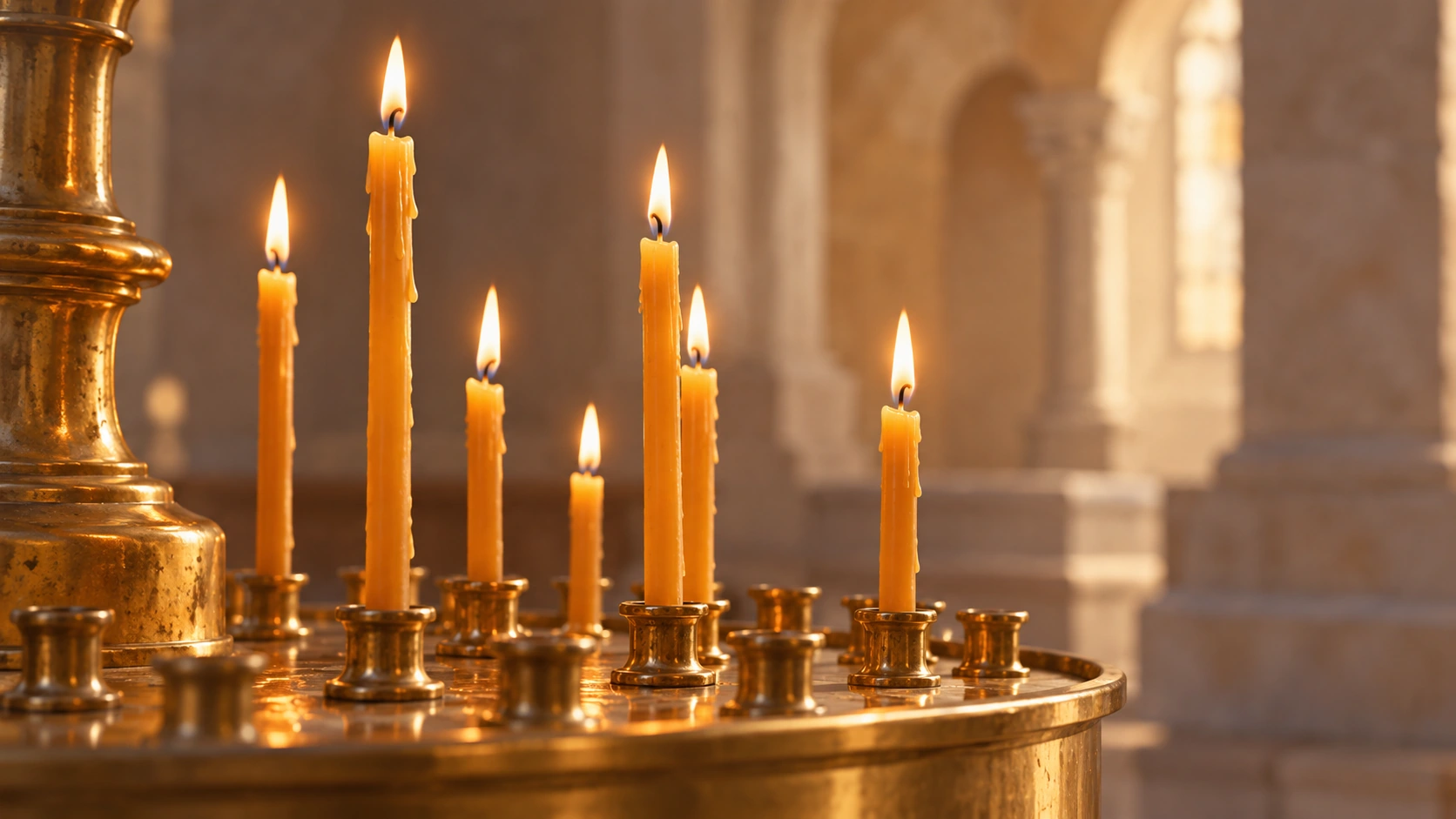
On a first visit to an Orthodox church, candles may be the first thing you notice. Someone lights one before an icon; another person stands quietly nearby. What does this gesture mean? Is lighting a candle compulsory? How many should you light, and what are you supposed to say?
Start with this: a candle can express prayer, but it does not replace prayer. You do not need to know every local custom to turn to God. If you feel unsure beside a candle stand, it is fine to ask someone at the parish to show you what to do.
Why candles are lit in church
Candlelight is a visible sign of prayer and hope. In Christian life, light points to Christ: in the Gospel of John, chapter 8, verse 12, He speaks of Himself as the light of the world. A church candle is therefore more than decoration, even though its warm light can help us become attentive.
When lighting one, a person may thank God, ask for help or pray for someone they love. The gesture gives a small outward expression to what they have brought to church. The size of a candle and how long it burns do not measure the strength of a prayer.
A candle does not guarantee an outcome
It is easy to encounter anxious advice about choosing a particular place, lighting an exact number or making sure a flame never goes out. Christian prayer is not a transaction of this kind. We do not control God through an object or purchase the fulfilment of a wish.
If a candle falls, goes out or is removed earlier than you expected, do not treat it as a prediction. These things can have ordinary causes. Adjust the candle if it is safe, or ask a parish attendant for help, and continue praying without searching for an ominous meaning.
A worry about doing everything correctly can become one simple question: “May I put a candle here?” Asking someone calmly is more helpful than collecting warnings and superstitions online.
Where should a beginner place a candle?
Church layouts and parish customs differ. Avoid assuming that the arrangement in one church applies everywhere. Ask where candles are placed and whether there is a separate place used when remembering the departed.
Before an icon of Christ, we address Him. When asking for the prayers of the Mother of God or a saint, we approach them as intercessors before God, not as separate powers in charge of particular areas of life. You do not need to find the “correct saint” for every everyday concern out of fear that God otherwise will not hear you.
Choose an accessible place without pushing through people who are praying. If the Gospel is being read or an important part of the service is taking place, wait quietly rather than distracting others. There will be another suitable moment to place a candle.
What can you say while lighting one?
A short, honest prayer is enough. For example: “Lord, thank You for today. Help me notice who needs my care.” Or: “Lord, help my loved one, [name]. Give them strength, and help me respond with patience and attention.”
These are examples of personal prayer written by our editorial team, not quotations from a prayer book. You can use different words or remain quietly attentive for a moment. You do not have to pray aloud, especially during a service.
If you are anxious, you do not need to assemble a perfect prayer before you begin. Name one real concern. Lighting a candle does not require an ideal mood: people bring confusion and tiredness to church, as well as gratitude.
Donations and parish life
Candles are usually available at the church itself; ask locally about the arrangement and any offering. Such a contribution supports parish life, but it is not the price of God's help. A more expensive candle does not place a person closer to God.
If you cannot afford a candle or do not understand the procedure, speak with a parish attendant. You can begin praying without buying one. Do not postpone turning to God because you have no cash or are unfamiliar with the candle desk.
Participation in a parish also extends beyond the candle stand. You might stay for prayer, learn the service schedule, ask about gatherings for beginners or help with a charitable activity. A candle can be part of a living connection, rather than the only reason to enter the church.
A few ordinary precautions
Treat the flame with ordinary care. Watch loose sleeves, hair and scarves, and keep children close. Do not carry a lit candle through a crowd or put it on a random surface. If there is no space on the stand, ask what to do rather than rearranging other people's candles.
When an attendant extinguishes or removes candles, do not immediately take this as disregard for your prayer. Candle stands need maintenance, and the building must be kept safe. Prayer does not stop when a flame stops burning.
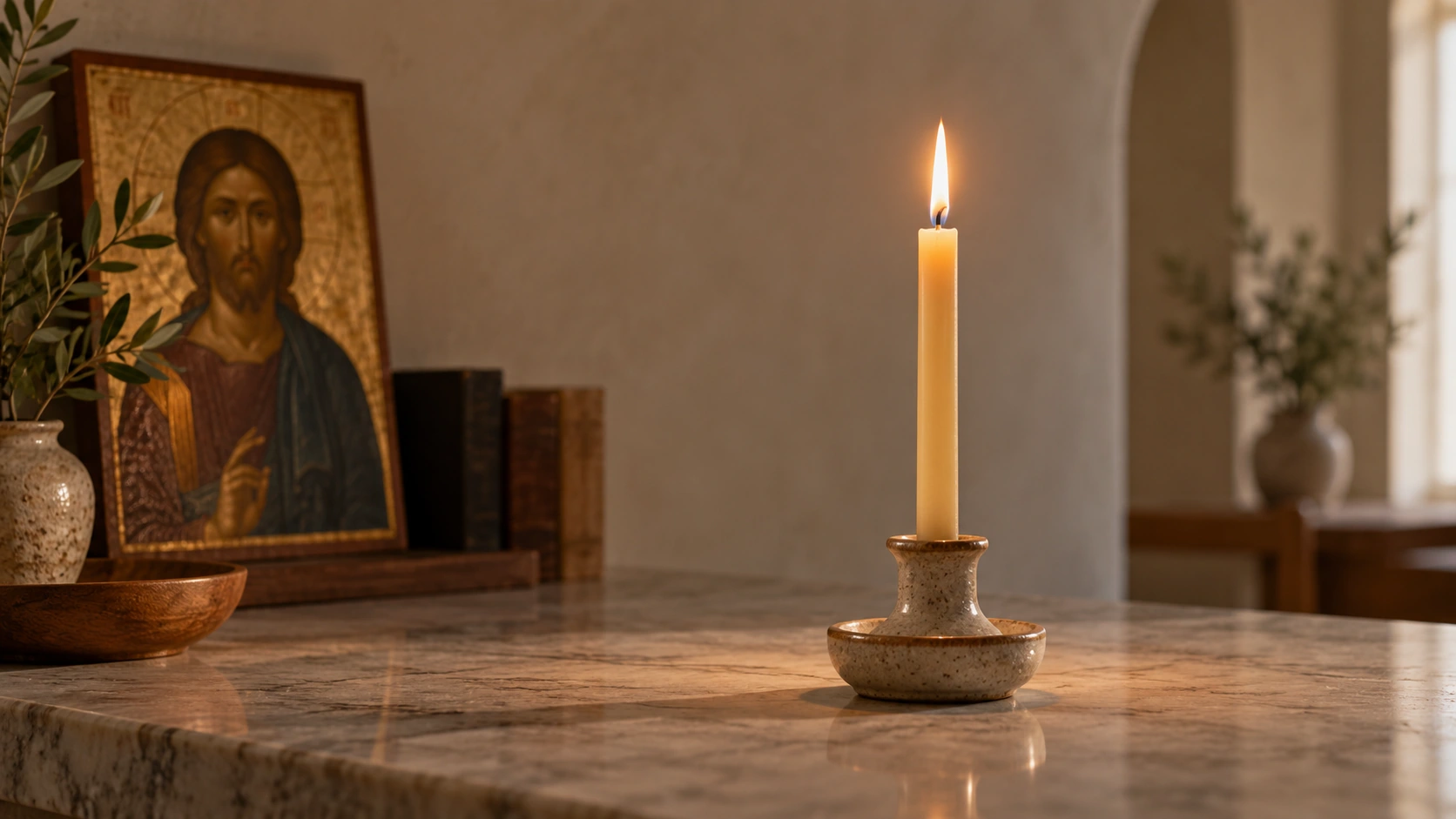
At home, too, you can pray without a candle. If you light one, use a stable holder and never leave it unattended. Taking care of your home and other people is entirely consistent with a thoughtful prayer practice.
What to carry into the rest of your day
For your next visit, one intention is enough: turn to God without rushing, and ask for help if something is unfamiliar. You do not need to memorize a complicated route through the building.
A candle can remind you of prayer, but its meaning continues in ordinary life: giving thanks, paying attention to a loved one and choosing a kind action. Begin with a few simple words. That is enough for a first step.