

You want to read the Gospel, but you are unsure where to begin. Which book should you choose? How much should you read? What happens when a sentence makes no sense? It can feel as though you need a course in history and theology before opening the first page. A small passage and a few quiet minutes are enough to begin.
This guide offers a manageable rhythm for reading at home. It is an editorial suggestion for beginners, not a mandatory church rule. Adapt it to your circumstances, and speak with a priest if you would like guidance on a regular practice.
What you are opening
The New Testament contains four Gospels: Matthew, Mark, Luke and John. They tell of Jesus Christ, His teaching and works, His death and resurrection. Each writer tells the story in a distinctive way, with the same Christ at its heart.
For Orthodox Christians, these books are Holy Scripture, read within the life of the Church. Personal observations matter, but they do not replace the Church's understanding. You do not have to become an interpreter immediately. Read attentively, notice questions and seek understanding gradually.
Which Gospel should you start with?
Mark is a useful first choice. It is relatively short, and many of its scenes are straightforward to follow. This is a practical recommendation, not a claim that the other Gospels are unsuitable. If you have already started Luke or Matthew, you can keep going.
Choose a complete Bible text in a language you understand. A retelling or a short explanation can be helpful, but distinguish it from the biblical text itself. If an older translation uses unfamiliar words, consult a reliable dictionary or an Orthodox commentary rather than guessing at every term.
At first, read one Gospel in order. This helps you understand more than a collection of memorable sentences. You begin to see who is speaking, what has just happened and why people respond as they do. A bookmark is a useful way to make tomorrow's starting point easy to find.
A simple five-to-ten-minute rhythm
Choose a small, repeatable moment: after breakfast, during a lunch break or before your evening routine. Leave the book somewhere accessible. If you read on your phone, silence unrelated notifications for those few minutes.
Before reading, you can pray briefly. For example: “Lord, help me listen to Your word and understand how to live more attentively.” These are suggested personal words written by our editorial team, not a quotation from a prayer book.
Read one complete scene. Pause and ask: What is happening? What does Christ say or do? What have I understood, and what remains a question? One short note is enough. You do not need to find a striking insight or feel a particular emotion every day.
Keep your first notes concrete. “Why were the people surprised?” is often more useful than trying to produce a polished explanation. A question you can return to is a worthwhile result of reading.
An example of attentive reading
Open the Gospel of Mark, chapter 2, verses 1–12. People bring to Christ a man who cannot walk. Their care, his healing and Christ's authority to forgive sins all matter in this passage. Reducing the whole story to a lesson about friendship or determination would miss important parts of it.
Read the passage as a whole first. Then distinguish what you actually found in the text from conclusions you supplied yourself. If you have a question about forgiveness, write it down and look for guidance from a reliable Orthodox author or a priest.
A modest personal response might be to remember someone who needs support and consider what help you can realistically offer. That is a suggestion for reflection, not a promise that copying an action in the story will produce the same miracle.
When you do not understand
Check who is speaking and who is being addressed. Read a few verses before and after the sentence. Sometimes a difficulty comes from lifting a phrase out of its conversation or setting.
If the question remains, keep a note of it. Leaving something open is better than hastily imposing a strict rule on yourself or another person. Be especially careful with passages about judgment, suffering and punishment: they should not become a ready-made explanation for someone else's misfortune.
Do not open the book at random to obtain a binding answer to an everyday decision. Scripture reading is not fortune-telling. It helps us come to know Christ and learn to live according to the Gospel; it does not remove our responsibility to make thoughtful choices.
A small plan for your first week
If a definite starting point helps, try seven short readings from the first chapter of Mark:
Day one: verses 1–8. Day two: 9–13. Day three: 14–20. Day four: 21–28. Day five: 29–34. Day six: 35–39. Day seven: 40–45.
Each day, keep three simple actions: read, notice one question or thought, and pray briefly. These divisions are an editorial plan for beginning at home, not the Church's appointed readings for that week.
If you miss a day, continue with the next unread scene. You do not need to turn a missed reading into a debt of several chapters. If you want to read a passage again, stay with it longer. The aim is attention, not speed.
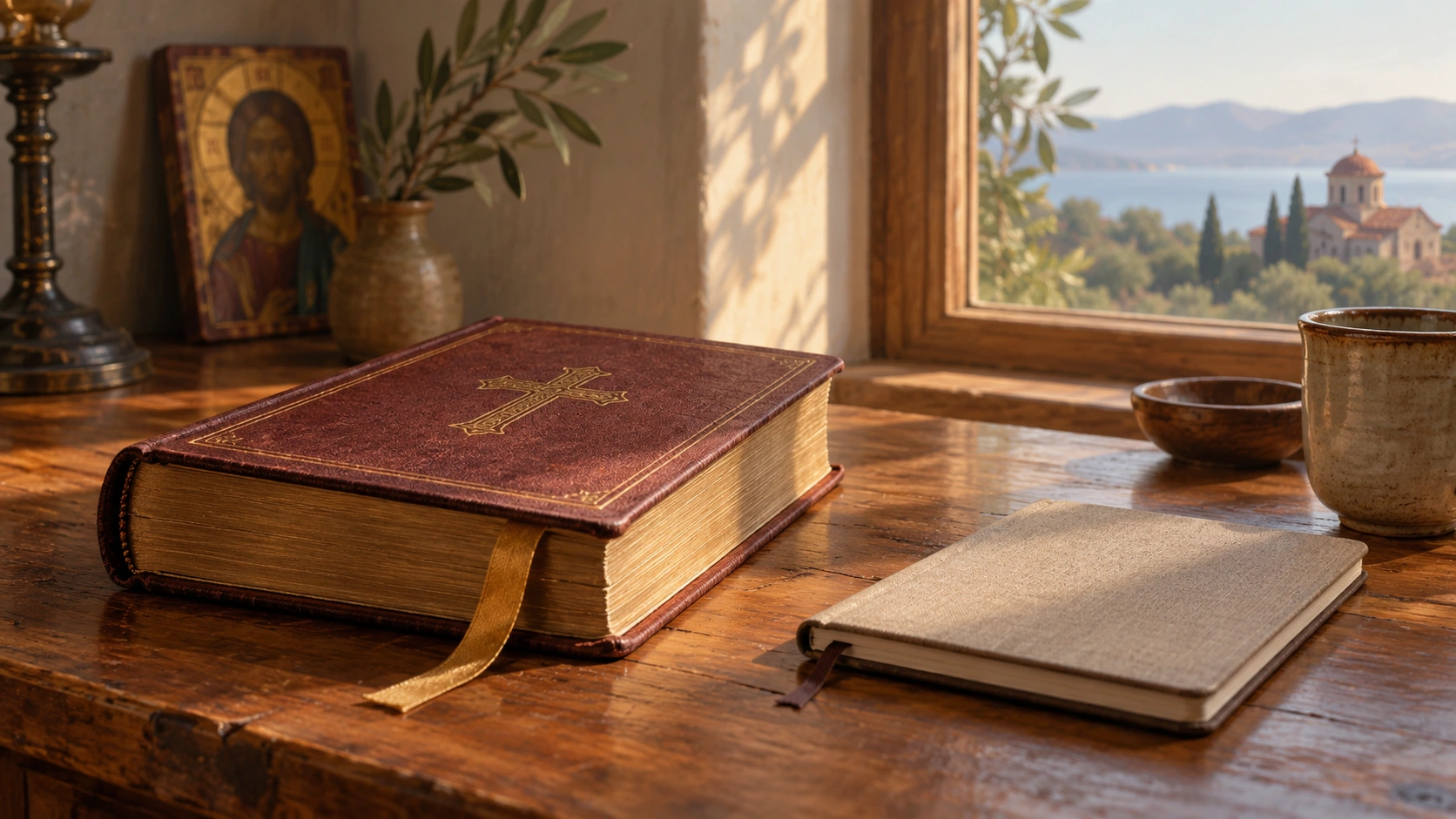
You can keep the plan beside the book and mark your place without judging your progress. The point is to make it easier to return, not to create another list you must complete perfectly.
Continuing on your own
After a week, notice what was manageable. Five minutes may be enough. You may prefer to read every other day and gather questions for a weekly conversation. Attentiveness matters more than an impressive schedule.
Reading at home can help you recognize the words heard at the Divine Liturgy, while prayer with the Church can invite you to return to a familiar passage with fresh attention. Begin with one scene today. You do not have to understand everything before taking that first step.